
• About Us
  • Privacy Policy
  • Terms of Use
  • Breaking News
  • Explainers
  • Listen Live
Thursday, June 11, 2026
Citinewsroom - Comprehensive News in Ghana
Advertisement
  • Home
  • News
    • Regional News
      • Ahafo Region
      • Ashanti Region
      • Bono East Region
      • Bono Region
      • Central Region
      • Eastern Region
      • Greater Accra Region
      • Northern Region
      • North East Region
      • Oti Region
      • Savanna Region
      • Upper East Region
      • Upper West Region
      • Volta Region
      • Western Region
      • Western North Region
  • Sports
    • World Cup
  • Politics
  • Business
  • Entertainment
  • Articles
  • Explainers
  • Editorials
No Result
View All Result
Citinewsroom - Comprehensive News in Ghana
  • Home
  • News
    • Regional News
      • Ahafo Region
      • Ashanti Region
      • Bono East Region
      • Bono Region
      • Central Region
      • Eastern Region
      • Greater Accra Region
      • Northern Region
      • North East Region
      • Oti Region
      • Savanna Region
      • Upper East Region
      • Upper West Region
      • Volta Region
      • Western Region
      • Western North Region
  • Sports
    • World Cup
  • Politics
  • Business
  • Entertainment
  • Articles
  • Explainers
  • Editorials
No Result
View All Result
Citinewsroom - Comprehensive News in Ghana
No Result
View All Result

High living costs due to low productivity, import dependence – Economist

Edwin KwakofibyEdwin Kwakofi
March 9, 2018
Reading Time: 2 mins read
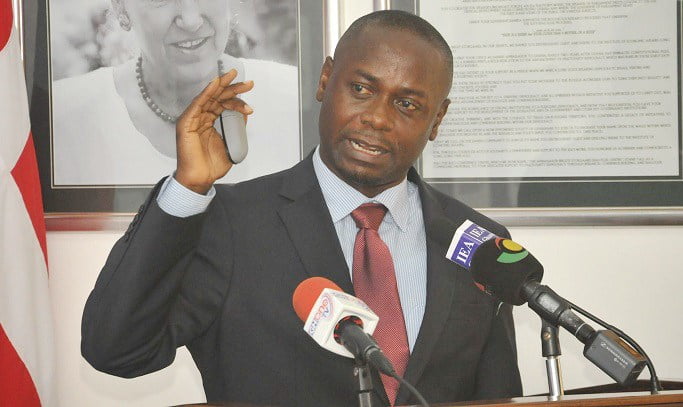
Dr. Eric Osei Assibey, Economist - University of Ghana

Prof. Eric Osei Assibey, Economist - University of Ghana

ShareShareShareShare

A senior economics lecturer at the University of Ghana, Dr. Eric Osei-Assibey, has attributed the high cost of living in the country to low levels of productivity and the consistently weak performances of the cedi on the foreign exchange markets due to the nation’s dependence on imports.

According to him the high prices of goods on the market are reflective of the high costs of production which are the results of the low levels of production as well as the inflated costs of raw materials.

[contextly_sidebar id=”xCTDrV8bmlGsbAyuxL7YWqTpJoO2SOsC”]“Ghana is a high inflation country, largely because our productivity level is very low, which then tends to increase the unit cost of production. So whatever we produce, because the productivity is low, the production cost is high, costs of raw materials are high, so definitely it will eat into our final pricing,” Dr. Osei-Assibey said yesterday [Thursday].

He also noted that the increased preference of Ghanaians for imported raw materials for production and the depreciation of the cedi was driving up the cost of production.

“Our currency is weak compared to other currencies in neighbouring countries and once you have a weaker currency and you depend so much on imported raw materials, it goes to increase your production cost. Despite the fact that you have low wages due to excess labour, other factors are very high and that pushes up transaction costs and production costs,” he added.
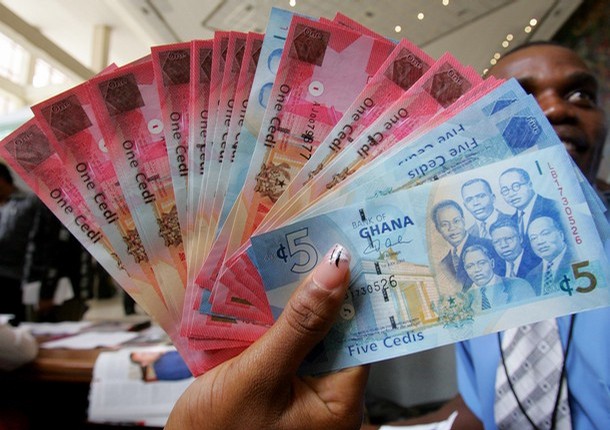
Dr. Osei-Assibey believes the consistently weak performances of the cedi on the foreign exchange markets due to the nation’s dependence on imports is a factor in the high costs of living

Silver lining?

Despite these challenges, the government has been quick to tout its achievements in managing the economy and the gains attained despite the fact that it had inherited an economy in dire straits.

As evidence of the progress of the economy, President Akufo-Addo, delivering the State of the Nation address in February, cited the strong trajectory of the Ghana Stock Exchange Composite Index in January 2018, which gained 19 percent in dollar terms, according to benchmarks tracked by Bloomberg.

The World Bank has also projected that Ghana’s economy will probably grow by 8.3 percent this year, which will be the fastest in the world in 2018.

The President expects these improving macroeconomic indicators to usher Ghana out of the International Monetary Fund programme later this year after his administration extended the 2015 programme.

“The good macroeconomic performance in 2017 will strongly support our successful completion of the IMF programme. We are determined to put in place measures to ensure irreversibility and sustained macroeconomic stability so that we will have no reason to seek again the assistance of that powerful global body.”

Nana Addo hailed Finance Minister, Ken Ofori-Atta as a national asset as he continues to oversee what he says is Ghana’s economic recovery

Beyond the strong economic indicators, President Nana Akufo-Addo said his economic management team had found imaginative ways to deal with the “oppressive debt situation” bringing relief to the country and rebuild the “annual average rate of debt accumulation as reduced from a high of 36 percent to 13.6 percent as at September 2017.”

“As a result of appropriate policy and the normalization of power situation in the country, [we]  have also engineered a spectacular revival of Ghanaian industry from a growth rate of negative 0.5 percent in 2016, to 17.5 percent in 2017,” he added.

President Akufo-Addo was, however, keen to stress that, the gains made on the economy from did not mean Ghana was out of the woods.

–

By: Edwin Kwakofi/citifmonline.com/Ghana

Tags: EconomyGhana NewsInflation
ShareTweetSendSend
Previous Post

Minority to sue over burning of tipper trucks

Next Post

Rawlings not ‘romancing’ NPP – Amissah-Arthur

Related Posts

Chairman of Parliament’s Select Committee on Health, Dr. Mark Kurt Nawaane
Featured

Afari, Sewua delays caused by inherited ‘ICU economy’ — Nawaane

June 10, 2026
File image
Featured

2026 World Cup: Cristiano Ronaldo unlikely to make significant impact – Akoto Boafo

June 10, 2026
Slider

2026 World Cup: ‘One of the most complicated World Cups ever’ — Godfred Akoto Boafo

June 10, 2026
Featured

Account for flood mitigation efforts – Weija-Gbawe MP to Ministers, MMDCEs

June 10, 2026
Featured

Weija-Gbawe MP calls for national rethink of flood management strategy

June 10, 2026
Chargé d'Affaires at the U.S. Embassy in Ghana , Rolf Olson. Photo Credit: US Embassy Ghana
Featured

US, Ghana reaffirm commitment to fight crime and terrorism

June 10, 2026
Next Post
Kwesi Amissah Arthur

Rawlings not ‘romancing’ NPP – Amissah-Arthur

ADVERTISEMENT
Citinewsroom - Comprehensive News in Ghana

CitiNewsroom.com is Ghana's leading news website that delivers high quality innovative, alternative news that challenges the status quo.

Archives

Download App

Download

Download

  • About Us
  • Privacy Policy
  • Terms of Use
  • Breaking News
  • Explainers
  • Listen Live

© 2024 All Rights Reserved Citi Newsroom.

No Result
View All Result
  • Home
  • News
    • Regional News
      • Ahafo Region
      • Ashanti Region
      • Bono East Region
      • Bono Region
      • Central Region
      • Eastern Region
      • Greater Accra Region
      • Northern Region
      • North East Region
      • Oti Region
      • Savanna Region
      • Upper East Region
      • Upper West Region
      • Volta Region
      • Western Region
      • Western North Region
  • Sports
    • World Cup
  • Politics
  • Business
  • Entertainment
  • Articles
  • Explainers
  • Editorials

© 2024 All Rights Reserved Citi Newsroom.