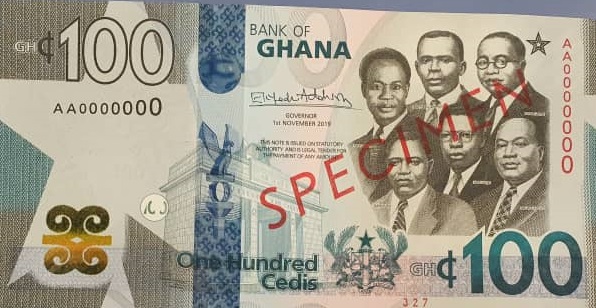
The Ghanaian cedi has metamorphosed in varied forms since its introduction by the Bank of Ghana in 1965, when the country made the decision to leave the British colonial monetary system and adopt the decimal system. In 1965, the Ghana pounds, shillings and pence was replaced with the Cedi notes and Pesewa coin.
The military Government after the overthrow of Dr. Nkrumah, issued a new currency called the “New cedi” in 1967 to replace the 1965 cedi. This new cedi was spent concurrently with the old cedi till 1979, when Government announced its plan to replace the old cedi with the new one. The old cedi was demonetized; new denominations issued included ₲1, ₲2, ₲5, ₲10, ₲20 and ₲50.
Seven different note denominations and eight coin denominations were introduced between 1972 -1994. These ranged between ₲2 to ₲5,000.00 for notes and ₲100p to 50,000p (₲500) for coins. In 2002 new denominations of ₲10,000.00 and ₲20,000.00 were added to the notes in circulation.
On 1st July 2007, the Cedi (₲) was redenominated to the GH (¢), such that ₲10,000.00 was equivalent GH¢ 1.00. The redenomination did not affect the intrinsic value of the currency – “the value is the same”.
The Central Bank gave two reasons for the redenomination –
- Increasing difficulty in maintaining accounting and statistical records.
- Problems with accounting data and processing software.
On Friday 29th November 2019, the Central Bank announced the introduction of GH¢ 100.00 and GH¢ 200.00 notes to the country cedi denomination and also the introduction of the GH¢ 2.00 coin.
The Central Bank gave historical antecedent about the re-denomination exercise that occurred 12 years ago and its relevance to present day. The rationale was an attempt to introduce efficiency in the economy and remove dead weight burden. 12 years after the re-denomination exercise, economic pressures such as high inflation and depreciation of the Ghana cedi had eroded the face value of the currency.
From the Central Bank communique, it made mention of following through with international best practices that required the review of the structure of the currency and its alignment with macroeconomic conditions and demand. The Central Bank projects that the introduction of the new denominations will restore partially the Dollar value of the higher denomination Ghana cedi
Following the comments and euphoria that greeted this the Central Bank policy of introducing new high notes, below are questions begging on the lips of many;
- Rationale of the introduction of the new currency denomination.
- The impact on the drive of having cash less economy.
In an attempt to educate stakeholders on the new denominations, the Central Bank has undertaken a series of media engagements to communicate the rationale of the introduction new cedi notes.
The Central Bank’s position is that the new notes would not be dispensed from ATMs but would only be available on request by customers at the bank. This indicates that the main reason for the new high value notes is to store up value and not for day-to-day transactions.
The feedback from the general public indicates an information deficit, which needs to be addressed by intensifying media engagement and education.
Globally, the world is moving from a cash economy to cashless one. This is evident with data from the Central Bank on the volumes of mobile money transactions that increase annually. Government’s policy of introducing mobile interoperability has consolidated the gains chalked in this sector.
The question then is in a bid to assuage this aim of a cashless economy, will the introduction of the new notes not derail this effort?
To conclude, the depreciation of the cedi and inflation has been flagged as the main cause of the issuance of the new notes. Opinions bouncing around in academic circles, is that efforts must be concentrated on having a strong currency. The artificial of restoring cedi to dollar by either redenomination or issuance of new notes has not worked over the years and it will not work now.