The automotive industry in Ghana has undergone numerous transformations and is currently experiencing rapid growth across the entire value chain.
One notable development is the introduction of the Ghana Automotive Development Policy, with corporate players in the automotive space investing over $50 million in vehicle assembly plants in Ghana supported by their respective OEM’s.
While this is commendable, investors continue to face challenges due to parts of the policy not being fully implemented, which creates difficulties in upscaling volumes and gearing up investors ROI.
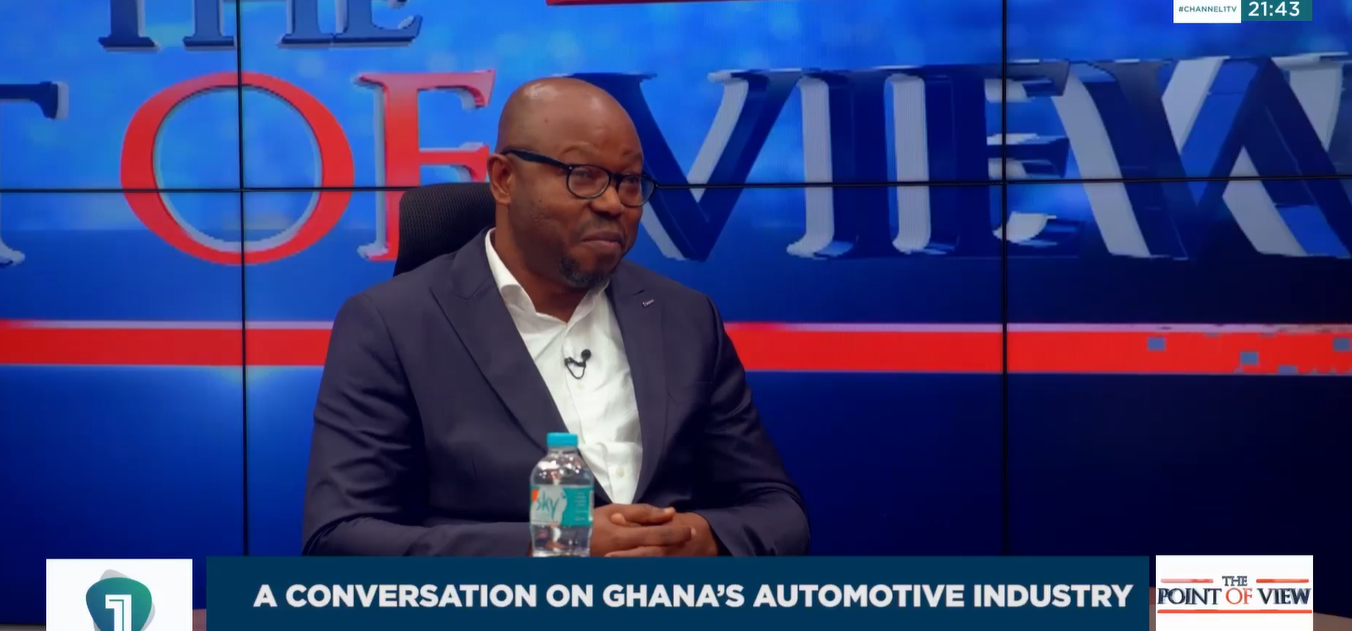
In a conversation with Bernard Avle on Point of View regarding the Ghana Automotive Policy, the Managing Director for CFAO Mobility Ghana and Country Delegate of the Group in Ghana, Mr. Adedamola, shared valuable insights into the automotive sector in Ghana and the challenges it faces in its quest to become a hub for mobility in the sub-region.
The Ghana Automotive Policy aims to establish a fully integrated and competitive industrial hub for automotive assembly in Ghana.
Mr. Adelabu highlighted the importance of the automotive sector to the growth of Ghana’s GDP, stating, “We are contributing to the country’s GDP. The automotive sector as a whole in Ghana accounts for about a quarter of the country’s GDP. So, it is a very significant sector for the country.”
While praising the efforts of the government and key stakeholders in formulating the game-changing policy, Mr. Adelabu underscored the gaps present in the policy, which seem to be stalling its full implementation and function in driving benefits to both the government and customers. He also mentioned that the cost of borrowing makes it very difficult for Ghanaians to purchase brand-new vehicles. He explained, “Everybody likes new things, so everybody wants to acquire new vehicles, but if that financing bit isn’t fixed, it becomes a real problem.”
Mr. Adelabu asserted that the new vehicle market makes up only 6,000 units a year, competing unfavourably with the thriving used car market, which comprises up to 90,000 units a year. He also highlighted the environmental impact of used vehicles and mentioned that the policy aims to increase the uptake of new vehicles to mitigate this impact. He added, “There is a lot of imbalance there, and what is driving it largely is that people go for salvaged, people go for used cars, just because within the equilibrium, the mix is not right…..the demand/supply factor being influenced by price/affordability. Today, the local assemblers of new vehicles in Ghana have capacity of 140,000 units, and we are selling only 6,000.”
Speaking on the global direction and movement towards electric vehicles in the automotive market, he reiterated that West Africa, especially Ghana, will be able to bridge the gap soon, especially once aspects of the policy are fine-tuned and infrastructural investments are put in place. He added that CFAO Group has already partnered with the global leader in electric vehicles and has established distribution partnerships in some African markets. Ghana is well positioned to take advantage of this opportunity in the future once all the pieces of the policy align perfectly.
Mr. Adedamola also mentioned the positive impact of CFAO Mobility Ghana’s activities on the lives of Ghanaians through job creation, skills training, and remarkable social impact interventions. CFAO Mobility Ghana is the sole distributor of Mercedes-Benz, Mitsubishi, Suzuki, and a range of heavy-duty equipment.