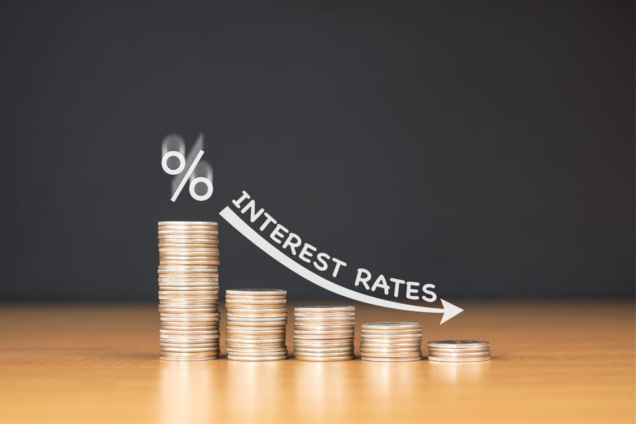
On Friday, February 28, 2025, treasury bills witnessed an unprecedented decline in yields, marking one of the sharpest drops in decades.
Latest auction results from the Bank of Ghana indicate that rates, which started the year between 28% and 30%, have now fallen to an average range of 20% to 22%.
This steep decline follows a series of strong investor demand and shifting yield expectations, largely driven by recent rejections of higher bids by the Treasury.
At the start of the year, the 91-day Treasury bill stood at 28.34%, but it has now plunged to 20.79%, a 760-basis-point drop. Similarly, the 182-day bill has fallen from 28.96% to 22.98%, reflecting a 600-basis-point decline. The 364-day bill, which was yielding 30.17%, has now dropped to 22.69%, marking a significant 750-basis-point reduction.
Was this expected and how low can T-Bill rates go?
For market watchers, the overall trend was anticipated, but the pace and scale of the decline have surprised many. Although it’s hard to know the lowest point, some factors can help estimate where rates will stop falling.
- Inflation and monetary policy: If inflation continues to decline, the Bank of Ghana (BoG) may have less pressure to maintain high yields. A stable inflation rate in the 15-18% range could push T-bill rates closer to 18-20%. They also note that, much will depend on the upcoming Monetary Policy Committee (MPC) decision. If the MPC maintains the policy rate at 27%, institutional investors might shift their focus to the Bank of Ghana’s 56-day bill should it offer a more attractive return. Additionally, the persistence of strong investor demand, coupled with the Treasury’s efforts to reduce borrowing costs, is likely to drive yields further down.
- Government borrowing needs: The government’s fiscal position will also play a role. If borrowing remains high, the BoG may need to keep rates attractive to investors. A reduced financing gap, however, could mean further declines.
- Market liquidity and investor sentiment: The high demand for T-bills in recent auctions suggests that investors are still keen on government securities, even at lower rates. If demand persists, rates could fall further but may not go below 18% without significant inflation control and policy shifts.
The big question now is: At what level will yields finally settle?
With no obvious and safe investment options available on the market, market watchers believe investors continue to lock in their funds in anticipation of further declines. The medium-term floor for yields remains uncertain, but investor appetite and the Central Bank’s next moves will be key in determining where rates eventually stabilise.
Government exceeds target despite rate drop
Despite the steep decline in rates, the government successfully exceeded its Treasury bill target in the latest auction. Total bids tendered amounted to GHS 18.25 billion, slightly lower than the previous week’s GHS 20.50 billion, yet still surpassing the government’s target by GHS 924.94 million.
The auction results showed that while the government aimed to raise GHS 6.49 billion, it received bids totalling GHS 7.41 billion, leading to an oversubscription of 14.18%. However, it rejected GHS 10.84 billion in bids. Investor interest remained particularly strong for the 364-day bill, which attracted GHS 8.72 billion in bids, out of which GHS 2.01 billion was accepted. The 91-day bill followed, with GHS 6.21 billion in bids, of which GHS 2.38 billion was accepted. The 182-day bill saw GHS 3.32 billion tendered, with GHS 3 billion accepted.
Looking ahead, the Treasury plans to raise GHS 5.74 billion in the next auction.
With investors continuing to chase yields, all eyes will be on the next policy decision and whether the downward trajectory of rates will persist or finally find a floor.