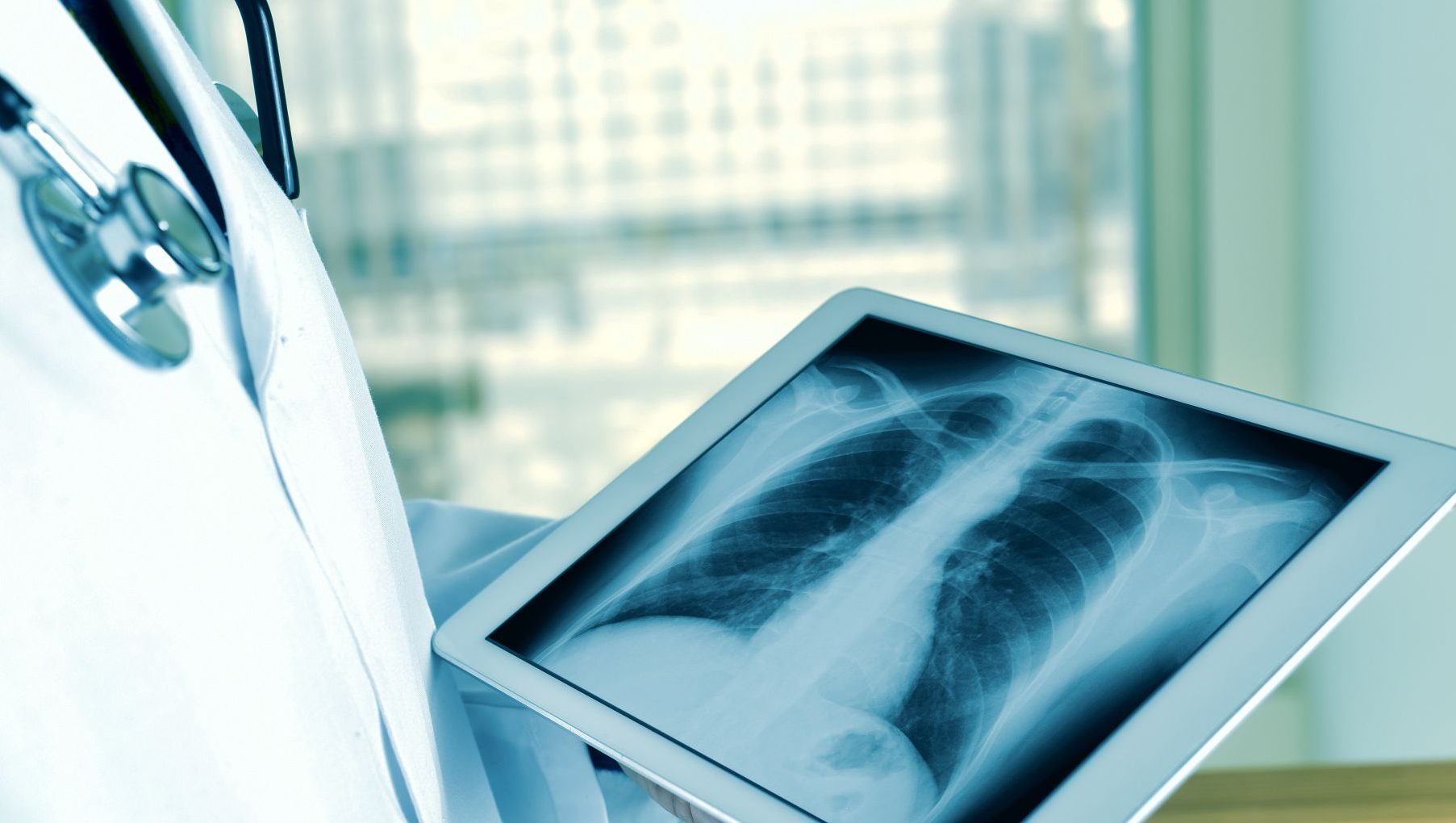
A chest X-ray was administered to an adolescent boy in Wa, located in the Upper West Region of Ghana, due to his persistent cough, which was suspected to be tuberculosis. The official report did not appear for several days, even though the image was captured immediately.
Equipment malfunctions were not the cause of the delay. It arose due to the absence of a local specialist who could interpret the image. Consequently, the file was required to be sent to Accra, where a limited number of radiologists were already overburdened. The disease had advanced, the treatment burden had increased, and the family was confronted with both financial and medical trauma by the time the report was received.
From Tamale to Bolgatanga and from Kumasi to rural outposts throughout West Africa, variations of this narrative are recounted daily. The system-level cost is profound, while the human cost is modest but constant.
The scope of the crisis
Modern medicine’s silent backbone is radiology. The diagnosis of infectious diseases, the identification of malignancies at treatable stages, the support of trauma care and surgery, and the monitoring of treatment response are all facilitated by accurate image interpretation. Nevertheless, the quantity and distribution of radiologists in Ghana are still severely constrained.
Ninety-three radiologists were documented in a national study, which is equivalent to approximately three radiologists per one million individuals in a population exceeding thirty-one million. No resident radiologist was present in seven of the sixteen regions.
The study also quantified significant geographic imbalances, with the national density of approximately 1.9 radiologists per five thousand square kilometers and the highest concentration in Greater Accra. On the other hand, most regions had between zero and two radiologists per five thousand square kilometers (Sarkodie et al., 2023).
The continental pattern reflects the regional pattern. In Nigeria, a population exceeding one hundred and seventy million is served by fewer than three hundred radiologists, according to multiple academic sources. This ratio has been verified in numerous clinical and workforce reports, resulting in approximately one radiologist per five hundred to six hundred thousand individuals (Edzie et al., 2023). In practice, this scarcity results in numerous investigations being conducted and subsequently interpreted by non-specialists or going unreported, particularly in areas outside of major urban centers.
The scarcity of resources is not restricted to individuals. The workforce deficit is further exacerbated by the uneven distribution of scanner density and advanced modality access across Africa, which includes substantial deficiencies in the use of CT and magnetic resonance imaging. These deficiencies result in delayed cancer diagnoses, preventable fatalities from trauma and obstetric complications, and increased expenses associated with conditions that are only treated at advanced stages (Hasford et al., 2023).
The repercussions are clinical, economic, and social. In districts where individuals living with HIV are at an increased risk of developing active tuberculosis, delayed tuberculosis diagnosis fosters community transmission. Specialists who are overextended are confronted with an increasing risk of error and decision fatigue.
The brain outflow is intensifying as newly trained radiologists emigrate in search of improved working conditions and career opportunities. Inequity is heightened by the fact that urban citizens who possess financial resources can purchase private reports within hours, while rural families are required to wait for days or weeks. These are not abstract issues. They are everyday realities that reduce survival, increase household impoverishment through care-related expenditure, and constrain national productivity (Tahir 2022).
Artificial intelligence is a significant game-changer
Artificial intelligence is not a panacea; however, it is a potent instrument that augments human expertise, minimizes backlogs, and provides consistent triage in the absence of a specialist. Speed at scale, reliable diagnostic support, and the facilitation of remote care models are the three pillars of the value proposition.
Targeted triage and speed at scale.
Modern image analysis systems can process a chest image in a matter of seconds and generate prioritization signals that advance the sickest patients to the front of the queue. The mathematics in districts lacking a radiologist on site is altered by the ability of a single platform to triage hundreds of chest images in a single minute. Ghana has a compelling example in the work done by Issah Abubakari Samori, who is currently a PhD candidate at Stanford University. At a Ghana-based AI laboratory, he developed deep learning systems that identify conditions like cardiomegaly and pleural effusion by analyzing datasets from the United States, Vietnam, and Ghana. According to a white paper published by their research, the most effective model outperformed comparable models to those performed by experienced radiologists on the same test images and obtained an area under the curve of0.97. This local science, which has global relevance, was developed by a Ghanaian scholarand is directly relevant to the country’s requirements (Akogo et al., 2022).
Clinicians are bolstered by diagnostic reliability.
Independent studies have demonstrated that computer-aided detection for chest images can match or surpass human readers for a variety of tasks when implemented with suitable thresholds and quality control, in addition to its speed. In 2021, the World Health Organization recommended the use of computer-aided detection for disease screening. This recommendation was reaffirmed in 2025 after a review of the most recent evidence across multiple software products and versions. In practical terms, this implies that the identification of cases can be enhanced by the combination of computer-aided detection and chest imaging, particularly in cases where human readers are in short supply (WHO, 2021).
This guidance above is further supported by evidence from the region as reported in research by Murphy et al. (2023). The diagnostic performance of computer-aided detection systems, including evaluations of CAD4TB, has been reported to be strong in African screening programs, as evidenced by rigorous scientific assessments published in major journals. Technology has attained maturity for adult screening workflows and continues to improve in pediatrics, even though performance can vary by population and age group.
Ghana has initiated the implementation of these instruments in critical environments. In a national initiative that enhanced HIV screening, systematic imaging, and related measures yielded a high yield at a low cost, thereby supporting the argument for the widespread implementation of digital chest radiography in conjunction with contemporary triage methods in Ghanaian facilities (Ghana Health Service, 2024).
Facilitating remote care that is both cost-effective and secure
Hybrid models of care are also enabled by artificial intelligence. The system can produce a structured preliminary assessment and identify anomalous regions, while a radiologist in Accra, Kumasi, or another country oversees complex cases or ensures quality (Joshi, 2024). This is already standard practice in some advanced systems. In the United States, artificial intelligence has transitioned from experimentation to routine support, with a significant proportion of authorized medical devices being associated with radiology. Sustained growth is evident in the official device registry, which confirms that radiology remains the primary domain for these clearances (U.S. Food and Drug Administration 2022).
To put it simply, the value case for Ghana and its neighbors is even stronger when specialist scarcity is the binding constraint, as high-income systems with thousands of specialists now consider artificial intelligence indispensable for timely care. The value case in question is not exclusively clinical. A recent analysis published in a radiology economics journal quantified substantial returns on investment when time savings and throughput gains are considered. This is because faster, safer interpretation reduces the duration of stay, prevents costly escalations of care, and redeploys scarce specialist hours to complex decisions (Bharadwaj, 2024).
Proven practices underpin comprehensive recommendations for Ghana and Africa.
The following actions convert evidence into a roadmap for implementation. They draw on United States’ regulatory and deployment experience, African pilot programs, and Ghanaian innovation.
1. For the purpose of evaluation and adoption, establish a well-defined national pathway
Develop a framework that is led by the Ministry and outline the process of evaluating, accrediting, procuring, and auditing artificial intelligence tools for imaging. The United States Food and Drug Administration maintains a public list of authorized artificial intelligence devices and has summarized pathways that balance safety with timely access. The Food and Drugs Authority and the Health Facilities Regulatory Agency in Ghana have the capacity to modify these components in accordance with local law. The framework should necessitate continuous post-market monitoring, published performance reporting, and local validation of Ghanaian and African data.
2. Establish the digital infrastructure that enables the practical application of artificial intelligence in areas beyond urban centers
Expand to high-volume district hospitals and prioritize the digitization of imaging in all regional and teaching hospitals. Invest in communication and archiving systems that provide cloud access and consistent power and connectivity. These backbones enable the rapid and secure transfer of images and preliminary artificial intelligence outputs between facilities, which is a feature of advanced systems in the United States. Most African countries have the option to co-finance this infrastructure with multilateral partners, and the implementation can be phased over a period of two to three years, commencing with regions that currently lack radiologists (Obuchowicz,2025).
3. Educate and authorize frontline clinicians on the safe use of artificial intelligence
Do not delay the deployment of these tools until the number of specialists increases. Integrate artificial intelligence literacy into brief courses for nurses, physician assistants, and radiographers to enable them to operate the software, interpret confidence scores and heatmaps, and adhere to escalation protocols. This is consistent with the practice of radiology technologists in hospitals in the United States, who employ artificial intelligence to triage routine images and promptly forward emergent findings to radiologists. Incorporate competency-based modules into the curricula of African Universities.
4. Expand platforms that are currently performing well and are led by Ghana
Leveraging the scholarly work of Issah Abubakari Samori and colleagues’from evaluation to staged deployment. Formalize a partnership between the Ghana Health Service, the Ministry of Health, and the universities and startup collaborators who developed the system. Establish a requirement for public reports on patient outcomes, turnover time, and accuracy. This method is like the network scale deployments in the United States Veterans Health Administration, where standardized artificial intelligence tools are employed to ensure consistent access across numerous institutions.
5. Establish a National Centre of Excellence for Artificial Intelligence in Healthcare
This should be modeled after the Medical Imaging and Data Resource Center in the United States. The center would establish annotation standards, facilitate cross-site model training, disseminate transparent benchmarks, and curate deidentified Ghanaian imaging datasets. It would also organize expert committees on data protection and ethics and work in conjunction with international partners to promote best practices in a manner that is appropriate for African countries’ circumstances.
6. Implement ethical and data protection protocols from the outset
Establish guidelines for consent, privacy, accountability, and explainability that are informed by the lessons learned from the regulatory developments in the United States and Europe. Establish a standing committee that evaluates deployments and a procedure for patients and clinicians to report any concerns. When utilizing multi-site data to enhance model performance, it is recommended to implement privacy-preserving training methods, such as federated learning.
7. Increase the scope of disease-specific programs that have already demonstrated the evident benefits of artificial intelligence
Make chest imaging with computer-assisted detection a standard component of tuberculosis screening for individuals living with HIV and other high-risk groups. Ghana has demonstrated yield at a modest cost in its early experience, and the global evidence since the 2021 World Health Organization recommendation is robust. Develop a strategy for the expansion of the program to prisons, mining communities, and densely populated urban areas, where the risk of transmission is significant.
A comprehensive call to action for African leaders
Radiologists’ scarcity is a health emergency and a development constraint. In Nadowli, a mother awaits a report that could warrant the commencement of treatment today for each day of delay. A patient with early-stage cancer enters a stage that is significantly more costly to treat and less likely to be curable with each week of inaction. Each month that passes without system modifications results in the potential departure of additional specialists to environments where their work is sustainable due to technology and personnel.
The path forward is straightforward and feasible within the current policy and budget frameworks, if actions are organized and prioritized in relation to the value they provide to patients.
Within the next six months
Issue a Ministry directive that establishes a national evaluation pathway for artificial intelligence in imaging, utilizing United States regulatory guidance as a reference point but incorporating Ghanaian validation and oversight. For a national learning network, choose three regional or teaching hospitals and five district hospitals. Prepare staff training plans and equip these sites with cloud-based picture archiving and communication capabilities and digital imaging.
Sign formal collaboration agreements that transition the work of Issah Abubakari Samori and colleagues into service evaluation in high-burden chest imaging sites. The evaluation protocol should be published with endpoints for safety, accuracy, and turnaround time.
Within the next twelve to eighteen months
Targeted community screening operations in urban and high-risk settings, as well as all main facilities that provide care for individuals living with HIV and any other deadly disease, should be equipped with computer-aided detection for medical screening. Align this scale with the World Health Organization’s guidance and with the surveillance indicators for the initiation of treatment and the detection of cases.
The National Artificial Intelligence for Health Centre of Excellence will be established with the responsibility of curating data, operating national benchmarks, and publishing annual performance reports for artificial intelligence tools in Ghanaian care.
Complete artificial intelligence training for nurses, physician assistants, and radiographers at the initial network sites and integrate artificial intelligence literacy into pre-service education for these professionals.
Within a period of two to three years
Implement digital imaging and artificial intelligence-assisted triage in all sixteen regions, with a particular emphasis on those with a negligible or nonexistent specialist presence, as evidenced by national workforce analyses.
Connect ongoing vendor payments to the actualized enhancements in diagnostic performance and turnaround times. Utilize the expanding body of international research on the return on investment to inform donor proposals and budget requests.
Finally, publish a national report on the impact of artificial intelligence in imaging that includes clinical outcomes, cost outcomes, equity outcomes, and workforce outcomes. This will ensure that Ghana is at the forefront of continental practice with transparent results.
In sophisticated systems, radiology is already being revolutionized by artificial intelligence. Radiology is the primary field for these authorizations, and the practice is transitioning from pilots to routine workflows. The United States has hundreds of authorized devices. Ghana cancapitalize on this experience by developing a model that is led by the country and is informed by local data and requirements. The country has the scientific talent, as evidenced by the work of Issah Abubakari Samori, and it has early program experience that demonstrates the potential of artificial intelligence and digital imaging to provide tangible benefits in Ghanaian settings. The remaining ingredient is decisive leadership.
No household in Ghana and Africa should ever have to wait for a simple image report for more than a few weeks. The investment will be repaid numerous times over by the lives saved, the infections prevented, and the costs avoided. The time has come to transition from a promise to action.
REFERENCES
Akogo, D., Sarkodie, B. D., Samori, I. A., Jimah, B. B., Anim, D. A., & Mensah, Y. B. (2022). MinoHealth.Ai: A Clinical Evaluation Of Deep Learning Systems For the Diagnosis of Pleural Effusion and Cardiomegaly In Ghana, Vietnam and the United States of America. ArXiv. https://arxiv.org/abs/2211.00644
Bharadwaj, P., et al. (2023). Quantifying the return on investment of hospital artificial intelligence projects. Journal of the American College of Radiology, 20(6), 1053-1061.
Ekpo, E. U., Hogg, P., & McEntee, M. F. (2023). Radiographers performance in chest X-ray interpretation in Nigeria. British Journal of Radiology, 96(1140), 765-773.
Hasford, F., et al. (2023). A review of MRI studies in Africa. Physica Medica, 68(1), 118-127.
Joshi, G., et al. (2023). FDA approved artificial intelligence and machine learning devices, with radiology as the leading specialty. Electronics, 12(10), 2505-2513.
Murphy, K., et al. (2023). Evaluation of a computer-aided detection system for tuberculosis. Scientific Reports, 13(2), 3684-3692.
RAD AID International. (2023). Nigeria country report. Retrieved