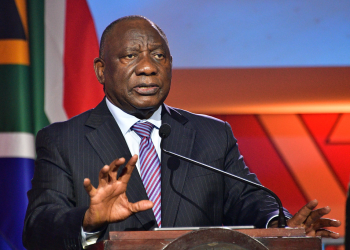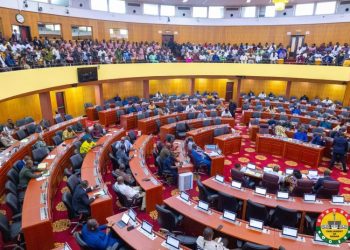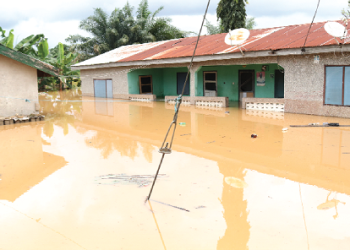
From historic hopes in 2017 to debt default in 2022, the Akufo-Addo administration’s arc is a study in early momentum, policy overreach, weak governance controls, and electoral-cycle indiscipline. As John Mahama returns to the Jubilee House after the December 7, 2024 vote, the National Democratic Congress (NDC) has a rare chance to fix what failed—if it resists the temptations that felled its predecessors.
The Promise and the Pivot
When Nana Addo Dankwa Akufo-Addo took office in 2017, expectations were sky-high. Flagship ideas—Free SHS, One-District-One-Factory (1D1F), digitisation, and a roads push—signalled urgency and scale. But by late 2022 Ghana faced its worst economic crisis in decades: inflation spiked to a 21-year high, the cedi slumped, and government suspended most external debt service before turning to a $3 billion IMF programme in 2023.
The administration later argued that the economy was “turning the corner” under the IMF. Even so, 2024 fiscal outcomes deteriorated, with the overall deficit widening and arrears building—classic signs of soft budget constraints in an election year.
Five Core Reasons the Government Fell Short
1) Macroeconomic slippage and firefighting crisis management
The 2022 default and the 2023 IMF programme followed years of widening deficits and rising debt, then shocks. Stabilisation progress required repeated IMF reviews and complex restructurings—domestic debt in 2023, an official creditors’ MoU in early 2025, and ongoing commercial negotiations. The scale of debt relief approved in mid-2025 underscored the depth of the hole.
2) Electoral-cycle indiscipline and fiscal credibility gaps
Despite programme targets, the 2024 deficit overshot plans. That weakened credibility, crowded out private investment through arrears, and spooked suppliers. “Silver-bullet” fixes under-delivered: the E-Levy, sold as a game-changer, raised far less than projected in its first year; later improvements couldn’t repair the reputational cost.
3) Governance lapses, costly scandals, and weak enforcement
Corruption perceptions stagnated or worsened; enforcement tools such as Auditor-General surcharges and the Special Prosecutor’s office too often met delays or political cross-winds. The National Cathedral controversy became a symbol of weak controls: audits flagged unsupported
payments, contract overlaps and poor financial discipline—a crisis of prioritisation during hard times.
4) Resource governance failures—especially illegal mining (galamsey)
Despite strong rhetoric, galamsey worsened on key dimensions: polluted rivers, damaged farmlands and cocoa-belt devastation. Enforcement was undercut by local political economy dynamics. Investigations in 2024–25 highlighted environmental harm and institutional leakage, including large gold-smuggling losses that bled fiscal space and credibility.
5) Delivery gaps: big announcements, thin institutions
A record-size cabinet early on raised cost-of-governance questions that never quite faded. The PDS electricity-concession fiasco cost Ghana MCC funds and dented investor confidence. Flagship projects were uneven: Free SHS dramatically expanded access but strained quality and infrastructure (double-track); 1D1F recorded successes but also hype-versus-reality disputes over which plants are fully operational and how many jobs are sustained.
Social Reality Check
Unemployment remained stubborn. Official labour statistics showed joblessness peaking in early 2023 and easing modestly by late 2024, with youth unemployment still persistently high—evidence that macro-stabilisation didn’t quickly translate into secure jobs.
What the NDC Must Learn—And Do Differently
1.Make credibility your first policy. Publish a full arrears audit; cap and clear verified claims on a transparent schedule; resist off-budget spending; and stick to IMF benchmarks while negotiating sensible flexibilities through a National Economic Dialogue with labour, business and civil society.
Markets and citizens will judge you by arrears and quarterly deficits, not speeches.
2.Shrink and professionalise the centre. Set a hard cap on ministers and deputies; consolidate overlapping portfolios; and empower a lean delivery unit tied to a public, quarterly scorecard. The 2017 “elephant-size government” saga is a cautionary tale—don’t repeat it.
3.Turn anti-corruption from headlines to handcuffs. Resource the Auditor-General to enforce disallowance and surcharge; mandate open contracting for all MDAs/SOEs; fast-track a robust Conduct of Public Officers Bill; and ensure high-profile probes reach prosecutorial closure, not stalemate.
4.Fix mining governance, not just policing. Formalise and regulate small-scale mining with traceability, mercury-free technology, and enforceable “no-go” zones; ring-fence riverine/ecologically sensitive areas; and incentivise co-ops that can be monitored. Close smuggling loopholes with customs reform and beneficial-ownership disclosures along the gold value chain.
5.Recalibrate Free SHS for quality and equity. Keep access universal but reverse double-track through targeted capital investment; optimise placements; and pilot need-sensitive support for non-tuition burdens (boarding, feeding) while protecting poor households. Build a bipartisan pact on teacher supply, textbooks and labs so outcomes rise with access.
6.Audit 1D1F and pivot to clusters, not scatter. Publish which firms are operating, their employment and fiscal costs; sunset non-performing support; and shift to industrial clusters and export-ready value chains (cocoa-adjacent processing, light manufacturing, pharmaceuticals) backed by competitive utilities and logistics.
7.Avoid prestige white-elephants. Complete health and education facilities with clear benefit-cost thresholds before launching new monuments; publish project dashboards to prevent another National Cathedral-style controversy.
8.Jobs, jobs, jobs—measurably. Tie tax reliefs to verifiable hiring, enforce 30-60-90-day payment discipline for MSME suppliers, expand apprenticeships with placement ratios, and link diaspora capital to bankable municipal infrastructure via transparent, rule-bound vehicles.
The Bottom Line
Akufo-Addo’s years remind us that big ideas without hard governance end in arrears, audits and anger. With a renewed mandate, the NDC’s task is not merely to change policy names but to change state behaviour—on fiscal control, contract management, mining governance and delivery discipline. If it does, Ghana can move from managing crises to compounding progress. If it doesn’t, we will repeat the cycle—only faster.
References (selected)
• Reuters. (Dec. 9, 2024). Ghana electoral commission declares ex-President Mahama election winner.
• International Monetary Fund (IMF). (2023–2025). Ghana—Press Releases and Staff Reports (1st–4th Reviews).
• World Bank. (April 2025). Ghana Overview (macroeconomic and fiscal updates).
• Ghana Statistical Service. (Dec. 2022). Consumer Price Index Bulletin (inflation peak); (2023–2025). Quarterly Labour Statistics.
• Bank of Ghana. (Mar. 2025). Monetary Policy Committee Communiqué (inflation and policy stance).
• Ministry of Finance, Ghana. (2022–2024). Annual Tax Revenue Performance Reports (E-Levy outturns).
• Transparency International. (2024). Corruption Perceptions Index—Ghana.
• Auditor-General of Ghana; Supreme Court of Ghana (GHALII). Key rulings and annual reports on disallowance and surcharge.
• Presidency/National Cathedral Secretariat; independent audits and media coverage (2023–2025) on financial controls and expenditures.
• Reuters; The Africa Report; The Guardian. (2024–2025). Investigations and analyses on galamsey, environmental damage and gold-smuggling leakages.
• Millennium Challenge Corporation (MCC). (Oct. 23, 2019). Statement on the PDS Concession Termination.
• Ministry of Education & peer-reviewed studies (2023–2025). Free SHS implementation effects on access, quality and resource strain.
• Ministry of Trade & Industry / 1D1F Secretariat (2017–2025). Official updates and parliamentary responses on project status and jobs.
By: Dr. Isaac Yaw Asiedu