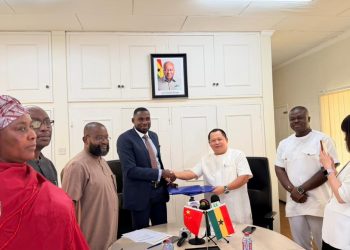



Energy Minister, John Jinapor has called for strong regional integration, arguing that the promise of the African Continental Free Trade Area (AfCFTA) cannot be realised unless African countries simultaneously commit to building a unified electricity market powered by cross-border infrastructure, harmonised regulations and coordinated investment.
Delivering the keynote address at the Ministers’ Roundtable of the 2025 West Africa Energy Cooperation Summit (WAECS) in Accra, the Minister stressed that AfCFTA and the African Single Electricity Market (AfSEM) “must go hand-in-hand” if Africa is to unlock industrialisation, digital transformation and large-scale investment flows.
“As host to the AfCFTA Secretariat, Ghana recognises that energy is the lifeblood of a functional single market,” he stated. “A continental trading zone cannot thrive on fragmented power systems. A unified energy market is the backbone that will power manufacturing, regional trade, logistics, and digital innovation.”
He said Ghana’s reputation as a safe, predictable destination for investment depends on the State’s continued commitment to uphold the rule of law, ensure regulatory predictability and resolve disputes through dialogue a principle he said is essential for cross-border energy projects and the investor confidence they require.
The Minister highlighted a watershed moment for regional energy cooperation: the first-ever full synchronisation of the West African power grid, following a successful WAPP test in November 2025 that temporarily linked the Ghana–Togo–Benin network with Nigeria.
“This is more than a technical achievement—it is a symbol of what West Africa can accomplish when we act collectively,” he said, adding that the data from the trial will inform a permanent synchronisation strategy, paving the way for a true regional electricity market.
According to the Minister, regional leaders must now move from dialogue to coordinated action by committing to bankable, standardised regional power purchase agreements (PPAs) and shared investment vehicles for cross-border infrastructure
“A unified electricity market will deliver scale, reduce costs, and create a dependable energy backbone for Africa’s single market. Without power, AfCFTA cannot deliver its full value,” he argued.
Ghana, he noted, is positioning itself as a regional energy hub by advancing reforms that align with continental goals including competitive procurement of generation capacity and private sector participation in distribution to improve efficiency.
These interventions, he said, are geared towards creating a stable, transparent and investor-friendly ecosystem capable of supporting both national and regional power markets.
The Minister urged ECOWAS states and regional regulators to use the Summit to accelerate practical implementation by harmonising transmission tariffs and market rules and strengthening regulatory and technical capacity through knowledge exchange.
“This is the moment for decisive leadership. Let us be remembered as the generation that connected our grids, deepened our partnerships, and powered the ambitions of our people”, he said.
With AfCFTA’s implementation gaining traction and the AfSEM architecture advancing, Ghana is positioning itself at the intersection of trade and energy integration.