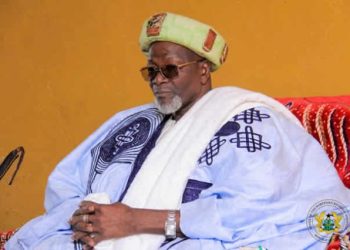
The Asantehene, Otumfuo Osei Tutu II, has revealed that both the Kusasi and Mamprusi factions made concessions during his mediation efforts aimed at resolving the long-standing Bawku conflict.
Presenting his mediation report as part of ongoing efforts to secure lasting peace in the area, Otumfuo outlined the historical circumstances that led to the protracted dispute.
He delivered the report to President John Dramani Mahama at the Jubilee House on Tuesday, December 16, recounting the origins of the conflict and tracing it to colonial-era administrative decisions and subsequent tensions between traditional authorities.
Otumfuo noted that successive governments have attempted to resolve the conflict over the years, with limited success until the present process.
Providing historical context, he explained that when the British arrived in Bawku in 1901, they were dissatisfied with the existing Tendana system, which recognised earth priests as custodians of the land.
He said the colonial administration subsequently adopted aspects of the chieftaincy system, appointing chiefs from among Tendanas where possible, and selecting other individuals in areas where qualified Tendanas could not be identified.
Otumfuo stated that the Kusasi maintain it was during this period that the Mamprusi presented themselves to the British as chiefs of their ethnic communities and were subsequently recognised and registered. He emphasised that the position of Tendana was never abolished and continued to exist alongside the introduced chieftaincy structure.
He noted that tensions escalated when some Mamprusi chiefs allegedly abused their authority over Kusasi landowners, prompting the Kusasis to remove Mamprusi chiefs and install their own.
According to the Asantehene, following the death of the last Mamprusi chief in 1956, the Kusasis selected Abugrago Azorka I as Bawku Naba in 1957. After his death in 1983, his first son was chosen in 1984 to succeed him as Zugraan Bawku Naba Asigri Abugrago Azorka II, a position he continues to hold.
The presentation of the report forms part of ongoing efforts led by the Asantehene to foster dialogue and achieve lasting peace in the conflict-prone Bawku municipality.