Diaspora investment is critical to the success of the African Continental Free Trade Area (AfCFTA), the African Union has said, as it calls for deeper engagement by Africans in the diaspora to support trade, economic justice, and structural transformation across the continent.
The Union argues that members of the African diaspora should play a more active role in advancing the continent’s reparations agenda, economic justice, and long-term structural transformation.
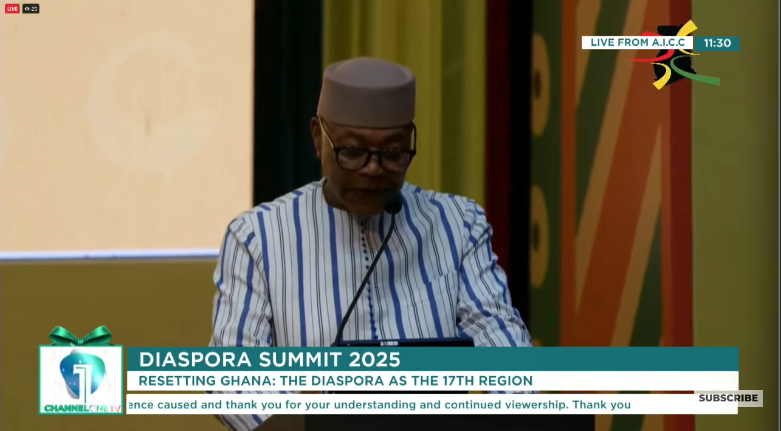
Speaking at the 2025 Diaspora Summit under the theme Resetting Ghana: The Diaspora as the 17th Region at the Accra International Conference Centre on Friday, December 19, 2025, the African Union High Representative for Silencing the Guns, Dr Mohamed Ibn Chambas, said the continent was deliberately positioning the diaspora as a strategic partner in its development and justice efforts.
Delivering remarks on behalf of the Chairperson of the African Union, Dr Chambas said the AU’s long-standing advocacy for the trans-Atlantic slave trade, deportation, and colonisation to be recognised as crimes against humanity was closely linked to ongoing global conversations on genocide and reparations.
“Just as the African Union has advocated for the trans-Atlantic slave trade, deportation, and colonisation to be recognised as crimes against humanity, and as genocide in the case of the Germans, this conference advances the conversation towards economic justice and structural transformation,” he said.
Dr Chambas said the AU was leveraging the strength and resources of the diaspora to support key continental initiatives, particularly the African Continental Free Trade Area (AfCFTA).
“Leveraging Africa’s diaspora to advance the African Continental Free Trade Area through diaspora investment instruments and sectoral opportunities across agriculture, energy, finance, education, tourism, culture, and the creative economy reflects the Union’s conviction that responses must be transformative, not transactional,” he said.
He stressed that reparations must result in concrete economic benefits. “Reparations must translate into ownership, opportunity, and shared prosperity,” he added.
Dr Chambas further noted that progress made in 2025 showed Africa was increasingly organising itself for justice through coordinated advocacy and institutional reform.
“The achievements this year demonstrate that Africa is organising for justice through institutional reforms and coordinated advocacy. The African Union has laid the groundwork for a sustained and credible reparations agenda,” he said.
He added that while progress had been made, significant work remained, particularly in strengthening institutional capacity and ensuring effective implementation at the national level.
“We will continue to address the remaining tasks, especially in institutional capacity and national-level implementation. Addressing these gaps requires sustained political leadership, deeper engagement by member states, and continued partnership with the diaspora,” Dr Chambas said.
Ghana’s economy improving, debt obligations will be met – Ato Forson
![Dr. Ellen Ohene-Afoakwa, [middle], newly elected Chartered Institute of Bankers (CIB) Ghana President](https://www.citinewsroom.com/wp-content/uploads/2026/07/CIB-Ghana-e1784064646202-350x250.jpeg)