Managing Director of Ghana Water Limited (GWL), Adam Mutawakilu, has outlined the major operational, financial and infrastructural challenges confronting the state-owned water distribution company, warning that persistent shortfalls and rising costs continue to affect reliable water supply nationwide.
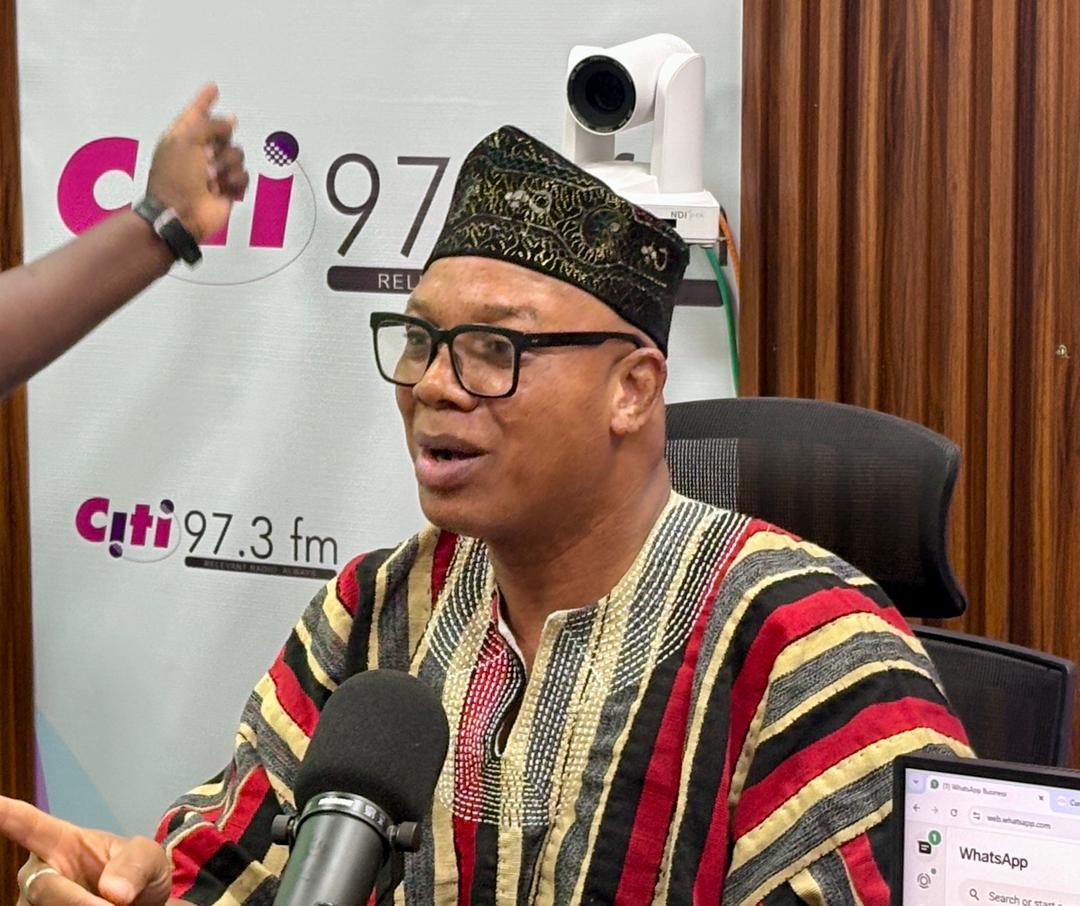
Speaking on the Citi Breakfast Show with Bernard Avle on Tuesday, January 13, 2026, Mr Mutawakilu provided a detailed snapshot of the company’s current situation and the steps being taken to improve efficiency.
Water Production Falls Short of Demand
The GWL Managing Director disclosed that Ghana is currently producing far less water than required to meet daily demand.
“The demand is about 350 million gallons a day. That means that with everything being equal, that is the amount of water we are to produce every day. But currently, we produce 214 million gallons, so about 136 million gallons short every day,” he said.
He noted that the situation is most critical in Accra, which accounts for between 60 and 70 per cent of national water demand.
“If we narrow it down to Accra, the demand daily is 210 million, and we produce 137 million. Accra alone takes about 60 to 70 per cent of the demand, so we have a shortfall of about 73 million in Accra,” he explained.
Financial Strain from Costly Treatment Plants
Mr Mutawakilu pointed to the Nungua desalination plant as a major source of financial pressure, explaining that GWL buys water at a significantly higher cost than it sells to consumers.
“If we take the desalination plant at Nungua, we buy the water at the cost of GH¢6.75 per cubic metre, and we sell it at GH¢1.47 per cubic metre,” he said.
He stressed that GWL does not determine water tariffs, resulting in losses of about GH¢5.58 per cubic metre, and making government subvention critical to the company’s survival.
“Normally, we have financial challenges and some operational challenges, but the current shutdown is mostly financial,” he added, noting ongoing discussions with the Ministry of Finance over debts linked to the plant.
Illegal Connections and Revenue Losses
The Managing Director revealed that illegal water connections remain a major challenge, with about 52 per cent of water produced going unaccounted for.
“People use the water without paying, so 52 per cent of the water produced is unaccounted for,” he said, describing the situation as alarming.
Through intensified enforcement operations in collaboration with National Security, GWL uncovered illegal connections valued at approximately GH¢5.5 million within four months.
“With the work of the three taskforce teams, non-revenue water dropped from 52 per cent in January to 49.4 per cent by November. That is encouraging, so we have engaged National Security to expand the teams to 12,” he said.
He added that about GH¢1.3 million has so far been recovered, with the Legal Department pursuing the remaining cases in court.
Aging Infrastructure and Limited Investment
Mr Mutawakilu highlighted the deteriorating state of water infrastructure, noting that many pipelines are outdated and prone to failure.
“We still have lines that were constructed with asbestos and cement. Out of a total transmission and distribution network of 13,680 kilometres, asbestos and concrete constitute about 2,352 kilometres. These need to be replaced,” he said.
He added that even newer PVC pipes are vulnerable to damage under pressure, worsening leakages and losses.
Low Adoption of Digital Payment Systems
The GWL MD also pointed to continued reliance on manual payment systems as a challenge to efficiency and revenue collection.
“Currently, just about 20 to 30 per cent of consumers pay using the digital platforms that have been provided,” he said, stressing that manual payments remain a major operational bottleneck.
Impact of Galamsey on Water Treatment
Illegal mining activities continue to affect water treatment plants, particularly in the Central, Eastern and Western Regions.
“In the Central Region, the Kwanyako and the Winneba treatment plants are the ones with very high turbidity,” he said, noting that turbidity levels peaked around August 2025.
However, he indicated that improved treatment methods have enabled continued water production.
“It was quite high around August 2025, but now our poly-electrolyte is able to treat the water. So, since the end of September 2025 to date, things have been better,” he explained.
Plants at Kyebi in the Eastern Region, as well as Tarkwa on the River Pra and the Ayensu plant in the Western Region, have also been affected.
Targets to Cut Water Losses
Despite the challenges, Mr Mutawakilu said GWL is working to significantly reduce non-revenue water to improve sustainability.
“With this, we are hoping to reduce non-revenue water from 49 per cent to 43 per cent, which is the target set by PURC. However, by the end of this year, our internal target is 45 per cent,” he stated.
He expressed confidence that sustained reforms, enforcement and investment will help stabilise operations and improve water delivery nationwide.
GWL uncovers GH¢5.5m illegal water connections in four months