The John Mahama administration on Monday, January 12, 2026 paid a total of US$1.47 billion to rescue and reset the country’s energy sector. It is a huge settlement power generators and other industry players have welcomed.
However, if you have been following Ghana’s energy sector, you would only admit it has evolved from industrial hope into a systemic threat to our macroeconomic stability. Why so?
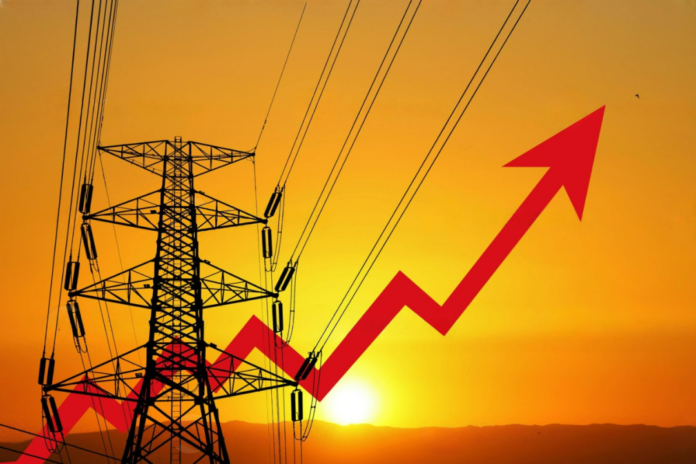
As of late 2025, the sector was burdened by a staggering $5.6billion (GHS80billion) debt overhang and without aggressive corrective reforms, this deficit is projected to exceed $9 billion by the end of 2026.
Understanding how we got here is important to ensuring we never return to it.
The take-or-pay albatross
The roots of the current crisis trace back to the emergency power procurement initiated between 2013 and 2016. At the time, the government signed numerous Power Purchase Agreements (PPAs) on a take-or-pay basis to resolve chronic shortages.
This meant the state was obligated to pay for electricity capacity regardless of whether it was consumed or even transmitted. This created an albatross of excess capacity consumed more national revenue than the combined investment in roads, hospitals and schools.
By the early 2020s, the energy sector had become a major source of contingent liabilities for the state. Debts owed to IPPs, gas suppliers and fuel providers spilled over into the banking sector, weakened state-owned enterprises and placed additional pressure on the national budget. The energy sector’s financial distress became a key factor in Ghana’s deteriorating creditworthiness and rising cost of borrowing.
The sector owed $1.4 billion to Independent Power Producers (IPPs) in 2025 specifically due to these legacy obligations.
ECG’s efficiency and revenue gap
While generation costs are high, the true epicenter of the liquidity crisis remains the Electricity Company of Ghana (ECG). As the primary distributor, the inability of ECG to recover costs has created a circular debt loop.
As of September 2025, the aggregate technical and commercial (T&C) losses of ECG stood at 27.05%, driven by energy theft, billing errors and aging infrastructure.
Furthermore, a significant revenue gap exists because electricity tariffs have historically not been cost-reflective. Political reluctance to adjust tariffs in real-time meant that utilities could not meet payment obligations to producers and gas suppliers.
Consequently, ECG alone accounts for over $4.2 billion in arrears owed to the value chain.
Macro-economic volatility
The debt was further exacerbated by macroeconomic instability. Most gas and power contracts are denominated in US dollars, while ECG collects revenue in Ghanaian cedis. The sharp depreciation of the cedi between 2022 and 2024 inflated the value of dollar-denominated arrears.
Another failure also occurred when the $500 million World Bank Partial Risk Guarantee (PRG), a safeguard for private investment in the Sankofa Gas Project was completely exhausted due to repeated non-payment for gas.
This depletion signalled a breakdown in fiscal discipline and damaged Ghana’s international credibility.
What the reset agenda restored
Recent efforts to clean up the sector have been significant. In its first year, the current administration has paid approximately $1.47 billion to stabilise the sector and clear legacy debts.
Key actions included:
1. Settling Gas Invoices: $480 million paid to ENI and Vitol for outstanding gas invoices.
2. Restoring the World Bank PRG: A repayment of $597.15 million (including interest) to fully restore the guarantee facility by December 2025.
3. IPP Debt Restructuring: Renegotiations led by local experts saved the country over $250 million and re-profiled $1.1 billion in legacy debt over a four-year period.
4. Programmed Payments: Government paid $300million in 2025 and has programmed $345 million for IPP payments in 2026.
6. ECG’s monthly revenue has risen significantly, with claims of an almost 90% increase. However, sector analysis indicates a more conservative growth of 66.6%, largely attributed to tariff hikes rather than structural efficiency gains.
The lessons
To avoid an energy sector relapse, several non-negotiable lessons arise.
Cost-reflective pricing remains a priority for a financially sustainable power sector. When tariff adjustments are delayed for short-term political convenience, the consequences are rarely avoided. They are merely postponed. Over time, these decisions weaken the finances and often culminate in large, taxpayer-funded bailouts that are far more painful than timely, transparent price corrections.
Equally important is the need for disciplined, demand-driven power procurement. Future administrations must ensure that new generation commitments are firmly anchored to credible demand forecasts. Ghana’s experience shows that emergency-driven procurement often at inflated costs creates long-term liabilities that saddle the energy sector with unsustainable debt long after the crisis has passed.
Addressing inefficiencies at the distribution level is another non-negotiable reform area. Even aggressive debt repayment efforts will deliver limited results if technical and commercial losses remain elevated. Reducing transmission and distribution losses, currently estimated at about 27 percent, alongside improving revenue collection, is key to restoring energy-sector soundness.
Finally, Ghana must jealously protect its credibility buffers. Financial instruments such as the World Bank’s Partial Risk Guarantee are not merely technical arrangements; they underpin investor confidence. Any default on these guarantees may provide short-term fiscal relief, but the reputational damage and future costs of rebuilding trust would far outweigh any immediate gains.
In sum, the country’s energy sector is currently in a state of cautious optimism. The transition to locally produced natural gas is projected to reduce generation costs by up to 75%. However, the real test of progress will be the technical and managerial discipline successive governments apply to maintain a sustainable, predictable payment schedule for years to come.