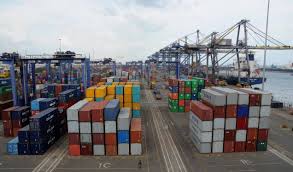
The Importers and Exporters Association of Ghana has raised alarm over worsening congestion at the country’s ports, with hundreds of containers remaining uncleared for prolonged periods.
The Association warns that the situation is disrupting supply chains, increasing operational costs, and placing additional pressure on businesses and consumers.
According to the Association, the congestion has been partly driven by the recent appreciation of the cedi, which has encouraged some importers to delay clearing their goods in anticipation of even more favourable exchange rates. This behaviour, coupled with operational challenges at the ports, has significantly slowed cargo clearance and led to a buildup of containers.
The Association further points to recurring system downtimes at the Meridian Port Services (MPS) terminal as a major operational bottleneck. These disruptions, it says, have affected cargo handling efficiency and contributed to the growing congestion at Tema Port, forcing some containers to be redirected to external terminals.
Speaking in an interview with Citi Business News, Executive Secretary of the Association, Samson Asaki Awingobit, cautioned that prolonged delays could translate into higher demurrage charges, increased prices for consumers, and reduced competitiveness for businesses that depend heavily on imported raw materials and finished goods.
“We are continuing to pray that nothing untoward happens and that the government maintains this stability to grow the economy,” he said. “There is a traffic issue at the ports, and there have also been one or two breakdowns at MPS. I am aware of the system MPS is using. When containers arrive at MPS, some have to be transferred to outside terminals.”
He noted that the added cost of moving containers to off-dock terminals, combined with extended clearance timelines, is placing an additional financial burden on importers, particularly small and medium-sized enterprises.
The Association has therefore called on port authorities and relevant stakeholders to improve system reliability, enhance coordination among terminal operators, and introduce measures that will encourage timely clearance of goods to ease congestion and safeguard trade efficiency.