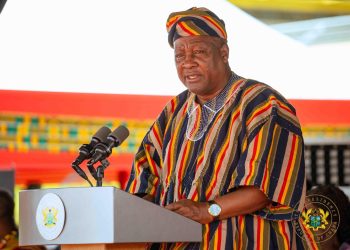
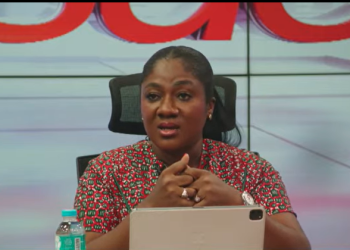
Archbishop Nicholas Duncan-Williams, General Overseer of Action Chapel International(ACI), has called for deeper biblical understanding over prophecies surrounding elections.
His remarks come after Bernard Elbernard Nelson-Eshun, an Accra-based preacher, publicly apologised when his widely circulated prophecy predicting victory for Kennedy Ohene Agyapong failed to materialise. The high stakes internal election to select its next flagbearer delivered a different outcome, igniting renewed debate over the place of prophetic declarations in competitive party politics.
Speaking on Channel One TV’s The Point of View with Bernard Avle on Wednesday, 25 February, Archbishop Duncan-Williams addressed the uproar that erupted before, during and after the primaries, where multiple prophecies were shared publicly about who would emerge victorious.
Responding to a question on how men of God should react when prophetic offices are publicly scrutinised in political contexts, he underscored the need to distinguish between Old Testament and New Testament prophecy.
He explained that under the Old Testament dispensation, people were led by prophets because the Spirit of God came upon individuals but did not dwell within them. By contrast, he said, the New Testament era is marked by believers being led by the indwelling Holy Spirit.
Citing Revelation 19:10, he noted that “the spirit of prophecy is the testimony of Jesus,” stressing that any genuine prophecy must ultimately point to the Lordship of Christ.
He also referenced Hebrews 1:1–2, explaining that although God spoke through prophets in times past, He now speaks through His Son, Jesus Christ, who promised the Holy Spirit as the Spirit of truth.
According to the Archbishop, many of the controversies surrounding election prophecies stem from a deficiency in biblical education rather than secular learning. He observed that in ancient Israel, prophets addressed kings appointed directly by God within a theocratic system — a framework fundamentally different from that of modern democratic states.
“Our countries and nations are secular. They are not the state of Israel,” he said, urging prophets to appreciate the distinction and exercise wisdom when commenting on electoral outcomes.
While cautioning against transplanting Old Testament prophetic patterns into contemporary democratic politics, Archbishop Duncan-Williams maintained that God still speaks today. However, he emphasised that spiritual leaders must approach politically sensitive prophecies with theological clarity, discernment and responsibility.
Read also
Channel One TV, Citi FM launch Heritage Month 2026 in grand style