
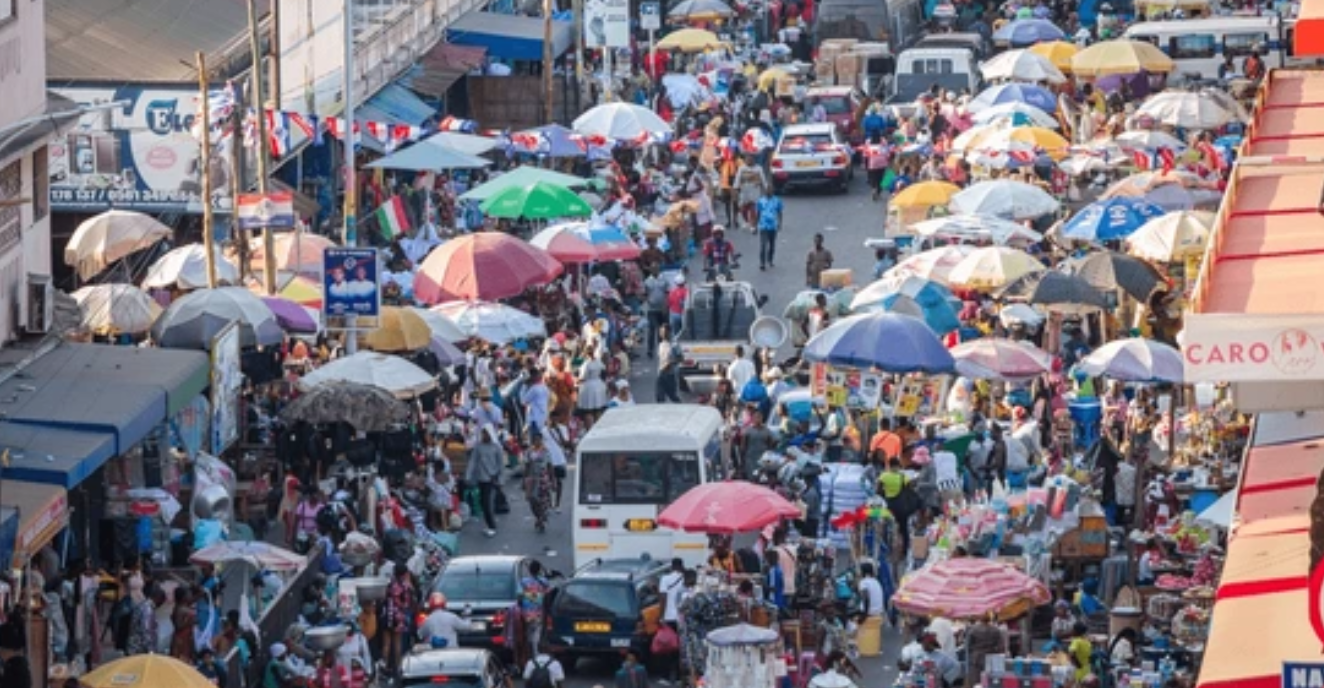
About 57.1% of mobile business operators in Ghana earn less than GH₵100 daily, according to the latest data from the Ghana Statistical Service (GSS) under the Integrated Business Establishment Survey (IBES), highlighting deep income vulnerabilities within the sector.
The data show that while mobile businesses are widespread—with 82,920 operators nationwide—earnings remain largely at subsistence levels, raising concerns about sustainability and productivity.
At the same time, the sector is heavily youth-driven. About 60% of mobile operators are aged between 15 and 34 years, positioning mobile trade as a key entry point into employment, particularly in urban centres where formal job opportunities remain limited.
Further analysis indicates that 85.2% of mobile businesses are engaged in goods trading, reflecting a concentration in retail activities typically characterised by intense competition, which constrains income growth.
Women dominate mobile business operations, accounting for 77.5% of operators, suggesting that income challenges within the sector disproportionately affect female-led livelihoods.
The findings underscore structural constraints within Ghana’s informal economy. While mobile businesses play a critical role in supporting daily commerce and last-mile distribution—especially in regions such as Greater Accra and Ashanti—they continue to face limited access to finance, infrastructure, and formalised trading systems.
Targeted interventions, including expanded access to microcredit, digital payment platforms, and skills development, will be essential to improving productivity and enabling young entrepreneurs to transition into more sustainable business models.