• About Us
  • Privacy Policy
  • Terms of Use
  • Breaking News
  • Explainers
  • Listen Live
Friday, June 5, 2026
Citinewsroom - Comprehensive News in Ghana
Advertisement
  • Home
  • News
    • Regional News
      • Ahafo Region
      • Ashanti Region
      • Bono East Region
      • Bono Region
      • Central Region
      • Eastern Region
      • Greater Accra Region
      • Northern Region
      • North East Region
      • Oti Region
      • Savanna Region
      • Upper East Region
      • Upper West Region
      • Volta Region
      • Western Region
      • Western North Region
  • Sports
  • Politics
  • Business
  • Entertainment
  • Articles
  • Explainers
  • Editorials
No Result
View All Result
Citinewsroom - Comprehensive News in Ghana
  • Home
  • News
    • Regional News
      • Ahafo Region
      • Ashanti Region
      • Bono East Region
      • Bono Region
      • Central Region
      • Eastern Region
      • Greater Accra Region
      • Northern Region
      • North East Region
      • Oti Region
      • Savanna Region
      • Upper East Region
      • Upper West Region
      • Volta Region
      • Western Region
      • Western North Region
  • Sports
  • Politics
  • Business
  • Entertainment
  • Articles
  • Explainers
  • Editorials
No Result
View All Result
Citinewsroom - Comprehensive News in Ghana
No Result
View All Result

BoG Governor outlines six strategic pillars underpinning revised cybersecurity framework

Nii Larte LarteybyNii Larte Lartey
March 26, 2026
Reading Time: 2 mins read
ShareShareShareShare

The Bank of Ghana (BoG) has introduced six strategic pillars forming the backbone of its revised Cyber and Information Security Directive (CISD 2026).

This is to ensure a safer and more resilient digital financial sector.

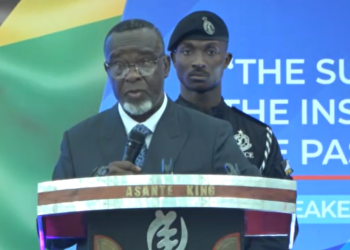
At the launch, Governor Dr. Johnson Asiama said that the framework is not just regulatory guidance but a commitment to every individual or business who entrusts their financial data to the sector.

“A Safer and More Resilient Digital Financial Industry,” he said, “is the central pillar of our regulatory philosophy.”

The CISD 2026 focuses on robust governance, clear accountability and proactive defence, with key innovations designed to future-proof the financial ecosystem.

“However, this progress has also invited sophisticated and persistent information security risks. From ransomware attacks that can paralyse a bank for days, to systemic data breaches that can shatter public trust in an instant, the threats we face are no longer just isolated IT incidents; they are national security concerns.”

“The Bank of Ghana recognised this shift years ago. The first Directive, issued in 2018, laid the groundwork. But we must be honest: a framework designed for the challenges of 2018 cannot adequately solve the problems of 2026. The threat landscape has changed, and so must we. We have moved beyond simple compliance toward a posture of active and collective cyber resilience.”, Dr. Asiama said.

The directive is built around the following six key pillars designed to future-proof the financial sector against cyber threats:

  1. AI and Machine Learning Governance – Ensuring transparency, fairness, and security as financial institutions increasingly adopt AI for fraud detection, credit scoring, and customer service.
  2. Cloud Computing Security – Promoting the responsible and risk-based adoption of cloud technologies while maintaining data sovereignty for sensitive financial information.
  3. Proportionality Framework – Tailoring cybersecurity requirements to the size and risk profile of institutions, preventing undue burden on smaller banks and fintechs.
  4. Board-Level Accountability – Mandating at least one board member with verified cyber risk expertise, embedding security considerations at the highest strategic level.
  5. Inclusive Oversight – Expanding coverage beyond universal banks to include micro-finance institutions, savings and loans companies, fintechs, and partner regulators, creating a unified defence across the sector.
  6. Proactive Defence and Preparedness – Strengthening systems to anticipate, prevent, and respond to evolving cyber threats.

“Building and maintaining a world-class defence capability like the FICSOC requires significant investment in infrastructure, advanced technology, and, most importantly, highly skilled personnel. As the Sectoral CERT, the Bank of Ghana has borne the initial cost of this critical national infrastructure to get it off the ground”, the Governor added.


Tags: Bank of GhanaCybersecurity frameworkDr Johnson AsiamaGhana NewsKey pillars
ShareTweetSendSend
Previous Post

Ibrahim Mahama meets Police Management Board over alleged assault

Next Post

Gyampo defends remarks on reparations, urges accountability and attitudinal change

Related Posts

Featured

Focus on performance, not political ambitions — Mussa Dankwah tells Ministers

June 5, 2026
Featured

Mintah Akandoh orders immediate suspension of KATH CEO

June 5, 2026
Barekese Water Treatment Plant
Featured

Barekese Water Treatment Plant set for temporary shutdown for repairs

June 5, 2026
Featured

Political watchers link Finance–Agriculture dispute to early NDC succession jostling

June 5, 2026
Minister for Finance, Dr Cassiel Ato Forson
Business

GH¢1.6bn has been disbursed to Agric Ministry – Finance Ministry insists

June 5, 2026
Featured

Finance, Agric Ministries clash over GH¢1.6bn funding claim

June 5, 2026
Next Post
Chief Executive Officer of the GSA, Professor Ransford Gyampo

Gyampo defends remarks on reparations, urges accountability and attitudinal change

ADVERTISEMENT
Citinewsroom - Comprehensive News in Ghana

CitiNewsroom.com is Ghana's leading news website that delivers high quality innovative, alternative news that challenges the status quo.

Archives

Download App

Download

Download

  • About Us
  • Privacy Policy
  • Terms of Use
  • Breaking News
  • Explainers
  • Listen Live

© 2024 All Rights Reserved Citi Newsroom.

No Result
View All Result
  • Home
  • News
    • Regional News
      • Ahafo Region
      • Ashanti Region
      • Bono East Region
      • Bono Region
      • Central Region
      • Eastern Region
      • Greater Accra Region
      • Northern Region
      • North East Region
      • Oti Region
      • Savanna Region
      • Upper East Region
      • Upper West Region
      • Volta Region
      • Western Region
      • Western North Region
  • Sports
  • Politics
  • Business
  • Entertainment
  • Articles
  • Explainers
  • Editorials

© 2024 All Rights Reserved Citi Newsroom.