Ghana is not merely fighting illegal mining. It is confronting a quiet national emergency. Our rivers, once sources of life and pride, now run thick with mud and mercury. Communities that depended on clean water wake up to brown taps.
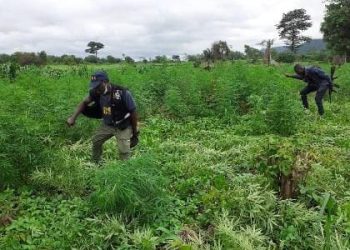
Farmers watch their lands collapse into craters. And yet, after years of task forces, presidential declarations, public outrage, and media campaigns, galamsey persists. Excavators are seized today and returned tomorrow.
Arrests are announced loudly and fade quietly. At what point do we stop describing this as an environmental problem and begin admitting that it may be something deeper? When destruction becomes routine, the crisis is no longer accidental; it is systemic.
The environmental devastation is undeniable. Rivers such as the Pra, Ankobra, Offin, and Birim have suffered severe pollution from illegal mining activities. Water treatment plants struggle under the burden of heavy siltation and toxic contamination. The cost of purification rises, and ultimately, citizens pay for it. Cocoa farms are uprooted.
Forest reserves are invaded. Toxic chemicals seep into soil and water, threatening public health and biodiversity. These are not abstract environmental concerns; they are tangible threats to food security, economic stability, and future generations. But the uncomfortable truth is that, environmental damage, as tragic as it is, may not be the most alarming part of the galamsey crisis. The most troubling question is why it continues.
Ghana is not without laws. The Minerals and Mining Act regulates mining activities. The Environmental Protection Authority has oversight responsibilities. The Minerals Commission supervises licensing. The Forestry Commission protects reserves. The police and military have, at various times, been deployed to clamp down on illegal operators.
On paper, the regulatory framework is not weak. On paper, enforcement mechanisms exist. Yet the rivers continue to darken. The excavators continue to dig. The pattern is painfully familiar. Public outrage rises, a task force is announced, a few machines are burned, arrests are televised, and then the momentum fades. If the laws exist but enforcement collapses, the issue is no longer legality. It is governance.
Some argue that galamsey is simply a poverty problem. Unemployment and economic hardship indeed push many young people toward small-scale mining. For some communities, illegal mining appears to offer immediate survival where formal employment fails. But poverty alone does not explain institutional paralysis.
Poverty does not prevent prosecutions from reaching a conviction. Poverty does not weaken regulatory agencies. Poverty does not suspend political will. While economic hardship may explain participation, it does not explain persistence. When the state repeatedly announces crackdowns, but the practice continues unabated, we must ask whether enforcement is inconsistent, selective, or compromised.
There is an uncomfortable political dimension to this crisis. Galamsey has become a campaign issue, a public relations battleground, and a symbol of competing promises. Political actors across party lines have condemned it, yet enforcement often appears episodic rather than sustained. When environmental protection depends on political timing instead of institutional independence, it becomes fragile.
If enforcement intensifies only when media pressure mounts and recedes when headlines change, then we are not dealing with environmental policy; we are witnessing political management of a crisis. Governance cannot be seasonal. The rule of law cannot operate on a campaign calendar.
This is where the deeper question emerges. Galamsey may be less about the miners in the pits and more about the institutions above them. When illegal operators feel confident enough to return after seizures and arrests, it signals something troubling. It suggests that the deterrent effect of the law is weak. It suggests that accountability may not be consistent. And when enforcement appears uneven, public trust erodes quietly. Citizens begin to believe that some actors are untouchable. Once that perception takes root, the damage goes beyond rivers. It seeps into democratic confidence.
A state proves its strength not by the number of task forces it announces but by the consistency of its enforcement. If excavators reappear in the same forests that were cleared months earlier, the message sent is devastating. Either the state cannot enforce its laws, or it will not. Neither conclusion inspires confidence.
Environmental protection is not merely about ecology; it is about authority. When a government cannot protect its natural resources despite having legal tools, the question shifts from environmental management to institutional capacity.
The economic cost of this crisis is also profound. Water treatment becomes more expensive. Agricultural productivity declines. Investor confidence wavers when regulatory enforcement appears unreliable. International partners question environmental governance standards. And beyond these measurable costs lies something harder to quantify: the loss of national pride. Rivers are not just water bodies; they are part of our identity. When they die slowly in full public view, and institutions appear hesitant or ineffective, citizens feel betrayed.
It would be simplistic to claim that Ghana’s governance structure has entirely failed. That would be unfair and inaccurate. There have been genuine efforts, arrests, reforms, and policy interventions. But the persistence of galamsey despite these efforts suggests structural weaknesses. Perhaps regulatory agencies lack adequate independence. Perhaps coordination among institutions is fragmented. Perhaps prosecutions are delayed or undermined. Perhaps political incentives complicate enforcement. Whatever the precise combination, the outcome is visible: illegality has proven resilient.
And that resilience is the most alarming feature of all. When unlawful activity becomes normalized, it ceases to shock. Brown rivers become ordinary. News of illegal mining feels repetitive. Public outrage dulls. That normalization is dangerous. It signals that society may be adjusting to dysfunction rather than correcting it. If environmental degradation becomes part of the national routine, then the problem has moved beyond mining—it has entered the realm of governance culture.
The real test of a constitutional democracy is not how it responds in moments of crisis, but how it builds systems that prevent the crisis from recurring. Sustainable enforcement requires more than military deployment; it requires institutional reform, transparent prosecution, consistent accountability, and insulation of regulatory agencies from political pressure. It requires long-term thinking rather than reactive interventions. Most importantly, it requires political courage that outlives electoral cycles.
Ghana’s environmental crisis forces us to confront an uncomfortable possibility. Galamsey may not be the disease; it may be the symptom. The polluted rivers are visible scars, but the deeper wound may lie within the machinery of governance itself. When institutions struggle to enforce clear laws, when enforcement fluctuates with political winds, and when accountability appears selective, environmental destruction becomes inevitable.
The question, then, is not simply whether galamsey is illegal. It is whether the state is institutionally strong enough to confront it without compromise. If governance is firm, consistent, and insulated from interference, illegal mining cannot survive for long. But if institutions are fragile, divided, or politically constrained, then excavators will continue to return, and rivers will continue to suffer.
Ghana stands at a critical moment. We can continue treating galamsey as a recurring environmental emergency, deploying task forces whenever public pressure peaks. Or we can confront the deeper governance challenges that allow it to thrive. One approach manages headlines. The other rebuilds institutions. One fights symptoms. The other causes disease.
The rivers are speaking. The land is warning. The question is whether we are prepared to listen not just to the cries of polluted water, but to what those waters reveal about the strength of our state.
God bless our homeland, Ghana, and make our Nation great and strong.
By: Dominic Ebow Arhin
Fellow – Institute for Strategic Governance, Policy, and Innovation (ISGPI – Ghana).