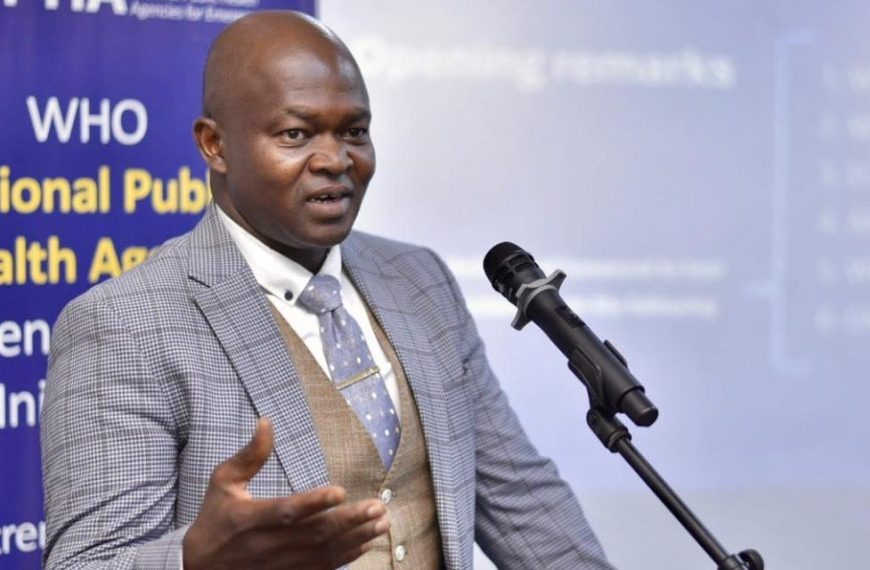
The Director-General of the Ghana Health Service (GHS), Prof. Samuel Kaba Akoriyea, has urged health workers to uphold high standards of professionalism and accountability in the discharge of their duties.
Speaking on his behalf, Mr. Mustapha Hamidu, Director of Finance at GHS, emphasised the need for stronger collaboration among health professionals to improve Ghana’s health and well-being.
He also encouraged staff to remain committed to integrity and teamwork.
“Let us continue to serve with integrity, lead with purpose and work together to improve the health and well-being of every Ghanaian,” Prof. Akoriyea said.
The remarks were delivered at the 2025 Annual Performance Review Meeting of the Volta Regional Health Directorate in Ho.
Prof Akoriyea thanked all staff in the region for their dedication, resilience, and unwavering commitment to the duty of delivering essential health services to communities despite systemic operational gaps, constrained resources, and often challenging working environments.
He also acknowledged health managers who carry the daily responsibility of leading service delivery at all levels, saying, “Your leadership ensures that policies are translated into care and that services reach the people who depend on us most.”
The Director-General admitted that performance indicators from the past year at the national level demonstrated encouraging progress, with improvements in service delivery indicators a reflection of the hard work and staff commitment, but called for efforts to be intensified to reverse some deteriorating trends.
He indicated that the trends were observed in institutional maternal mortality, skilled delivery, mortalities related to non-communicable diseases, family planning acceptor rates, and Penta-3 coverage, among others.
“These indicators represent real lives and family realities, and they demand renewed focus, innovation and strengthened supervision at all levels of care. Our reviews must therefore be honest, evidence-driven, and solution-oriented.”
To ensure effective operations this year, Prof Akoriyea tasked all regional directors to assert their leadership roles with confidence and with his full backing, by maintaining discipline within their regions, safeguarding the financial health of their facilities, and ensuring consistent availability of medicines, consumables, and essential logistics.
He said the regional directors must manage internally generated funds responsibly, keep close watch on underperforming facilities and districts, intensify supportive supervision, and remain visible on the ground.
Prof Akoriyea urged every region to address concerns proactively to avoid unnecessary public controversies and maintain public trust.
He mentioned the upcoming launch of government’s Free Primary Health Care Policy, designed to eliminate financial barriers to healthcare access and which would focus on existing primary healthcare services, population-based interventions, and community engagement, necessitating rapid staff orientation and training nationwide for the policy’s success.
Prof Akoriyea assured regional directors and their team of continued support from the GHS Council to address challenges in service delivery, such as staffing, funding, infrastructure, and equipment, highlighting the commitment to creating an enabling environment for effective performance of duties.
On his part, Volta Regional Minister James Gunu,, described the theme for the performance review as being in alignment with government’s flagship health agenda built around three key interventions of Free Primary Healthcare, 24-Hour Healthcare Programme and Ghana Medical Trust Fund (Mahama Cares), noting successful implementation of these programmes would improve the overall health status of citizens in the region and across the country.
Mr Dela Kemevor, GHS Council member in a solidarity message assured of the Council’s continued support in providing strategic direction, strengthening governance and advocating for the resources needed for improved service delivery.
He urged the Directorate to in its review, confront challenges with honesty and determination while being mindful that issues of resource constraints, infrastructure gaps, workforce pressures and emerging public health threats required innovative thinking and sustained collaboration.