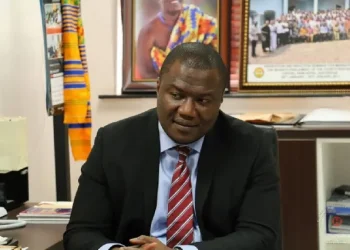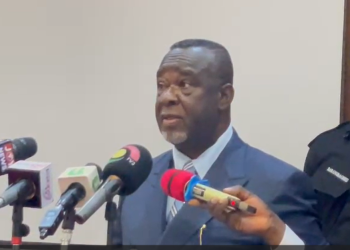
I was genuinely perplexed when I watched the interview of the Chief Executive Officer of the Ghana Free Zones Authority, Dr. Mary Awusi, responding to comments made by the Chairman of The Church of Pentecost, Apostle Eric Nyamekye.
The tone, posture, and force with which she defended her position raised more questions than answers. More importantly, it left me wondering: what exactly did the Apostle say that warranted such a response?
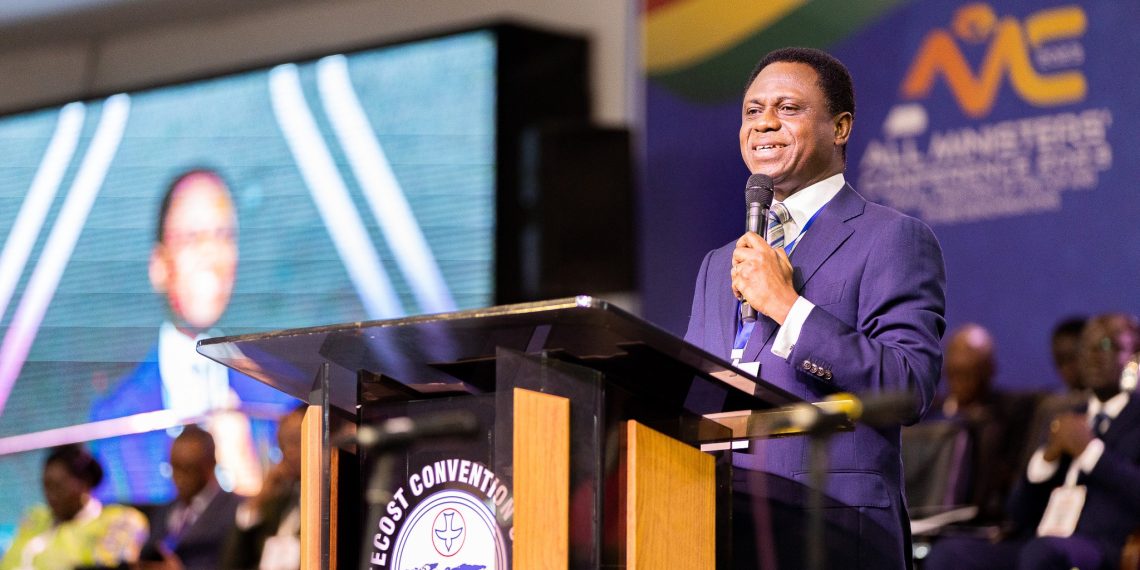
Apostle Nyamekye, in his “State of the Church” address at the 48th General Conference, raised concerns about the devastating impact of illegal mining, popularly known as galamsey, on Ghana’s water bodies.
He explained that the pollution of rivers and streams is now affecting even key religious practices such as water baptism in some mining communities. He also highlighted the broader impact on livelihoods, particularly in farming and fishing communities.
These are issues that are already well known in the national space. Even President John Dramani Mahama has previously acknowledged that illegal mining has deeply infiltrated Ghanaian society, involving actors across political and traditional structures, making the fight against it complex and ongoing.
So again, what exactly was wrong with the Apostle raising these concerns?
Dr. Awusi, in her response, described the comments as political and cautioned the Church leader to stay within his religious role.
“He’s a man of God, so we will forgive him. But next time, he should not stoop so low. If he descends to that level and behaves like a politician, we will deal with him as a politician,” she said.
She further insisted that his remarks were “highly political” and urged him to focus on his priestly duties, leaving politics to politicians.
With respect, that response was unnecessary and avoidable.
For years, religious leaders in Ghana have been invited into national conversations whenever issues of corruption, morality, and social breakdown arise. Their voices are often encouraged and even celebrated when they speak on matters affecting the nation. Yet, when a religious leader speaks on a pressing environmental crisis like galamsey, the tone suddenly changes.
That contradiction is difficult to ignore.
Galamsey is not a partisan talking point. It is an environmental, economic, and social crisis. When polluted rivers can no longer support drinking water or religious rites such as baptism, the issue goes beyond politics.
Dr. Awusi also referenced conditions under previous administrations in mining communities, suggesting that water quality has improved in recent times. But that argument does not erase the reality of ongoing environmental destruction, nor does it address the substance of the concerns raised.
What was expected in such a moment was engagement with the issue, not the dismissal of the messenger.
The reaction sparked strong political responses. The Member of Parliament for Effiduase/Asokore, Nana Ayew Afriyie, issued a 48-hour ultimatum demanding an apology, while the National Organiser of the New Patriotic Party, Henry Nana Boakye, called for her dismissal over what he described as distasteful remarks.
Following the backlash, Dr. Mary Awusi has since apologised for her comments, effectively drawing a line under the controversy.
Her apology is a necessary step and helps to calm tensions, but it also underscores an important lesson: public discourse, especially on national issues like galamsey, demands restraint, context, and respect for differing voices.
Apostle Nyamekye raised concerns about a national crisis that affects millions of Ghanaians. The reaction it attracted, and the subsequent apology, suggest that the focus momentarily shifted away from the real issue.
But the attack on the Chairman of The Church of Pentecost was unnecessary. It did not advance the conversation on galamsey. If anything, it distracted from it.
And that, perhaps, is the real loss in all of this. In the end, galamsey remains unresolved—and that is where the attention should return.