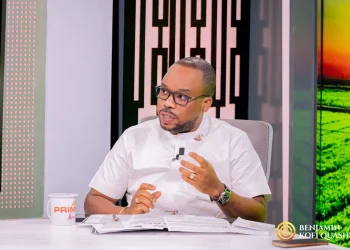
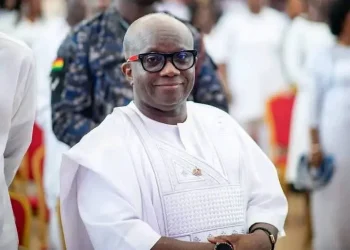
The General Manager of Citi FM and Citi TV, Bernard Avle, is convinced that the regularity with which Ghana and other countries in the global South seek assistance from the International Monetary Fund (IMF) indicates deeper issues beyond mere IMF-dictated fiscal discipline.
According to him, “There are ideological, cultural, philosophical, and historical factors at play that require comprehensive analysis”.
He pointed out that IMF programmes, often short-term and focused on analytical tools and policy prescriptions ill-suited for post-colonial economies, fail to address the fundamental structural challenges faced by these countries.
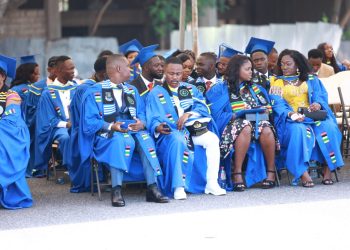
Mr. Avle made these statements as the keynote speaker at the 14th Congregation of the Accra Business School.
He was speaking under the theme, “Breaking the 17; Alternatives To IMF Conditionalities for Economic Development In Ghana.”
He noted that the recent IMF programmes dating back to 2003, 2009, and 2015, have failed to transform the economy into a dynamic and resilient one capable of withstanding various shocks, including pandemics, external conflicts, or currency fluctuations.
Although the stated objectives of the latest programme may differ in form, he noted that they were essentially aimed at achieving macroeconomic stability.
Avle said that Ghana’s frequent reliance on the IMF is not an isolated case pointing to several other African nations, including Zambia, Ethiopia, Chad, and Egypt, that have also sought debt relief through the Group of 20’s (G20) Common Framework mechanism.
According to the IMF’s Regional Economic Outlook Report, as of March 2023, the IMF had lending arrangements with 21 nations in sub-Saharan Africa, highlighting the increased borrowing costs for these countries. “One of the fundamental issues is the burden of dollar dependency. Many of these countries, including Ghana, heavily rely on imported food and fuel, which puts pressure on their currencies and increases their vulnerability to external debts,” he stated.
He pointed to the nation’s focus on the export of cash crops like cocoa, as recommended by the World Bank during the structural adjustment programmes, as having a significant impact on annual expenditure on food imports, contributing to trade deficits.
Similarly, Avle noted that the country’s energy mix relies on imported fossil fuels, further exacerbating its petrodollar dependence. Therefore, to break the cycle of dependence, he suggested that Ghana needs to prioritize economic sovereignty.
These, he said include taking steps to reduce vulnerability to external debts, enhancing agricultural productivity, harnessing renewable energy sources, and developing value-added manufacturing.
He cited countries like Israel and Costa Rica as examples of how these approaches can lead to economic benefits, reduced imports, and increased job creation. Furthermore, he suggested that investment in high-quality education, particularly in business schools, is crucial for developing a skilled workforce and fostering economic development.
He stated, “Institutions like the Accra Business School play a vital role in equipping future business leaders with the necessary knowledge and skills to drive industrialization and global competitiveness.” Ghana’s recurring reliance on the IMF highlights deeper structural issues that require a comprehensive approach.
“Achieving economic sovereignty through food security, renewable energy, value-added manufacturing, and quality education will pave the way for sustainable economic transformation and job creation,” he concluded.
Ghana, a country with a rich history since gaining independence in 1957, has been grappling with recurring fiscal and external imbalances for the past 65 years.
These imbalances have resulted in high inflation, declining reserves, a depreciating currency (the Cedi), and high-interest rates. In order to address these challenges, Ghana has repeatedly turned to the International Monetary Fund (IMF) for financial assistance, with the recent approach being the 17th since independence.
Over the years, Ghana has experienced periods of large fiscal deficits, significant debt build-ups, high debt service costs, and low public investment, with the burden of servicing the country’s debts now one of the biggest challenges for the current government, leading to painful domestic debt restructuring.
This restructuring was a prerequisite for the latest IMF programme, which was initiated in July 2022 and approved on May 17, 2023. Breaking the cycle of seeking IMF support has become a pressing task for Ghana.